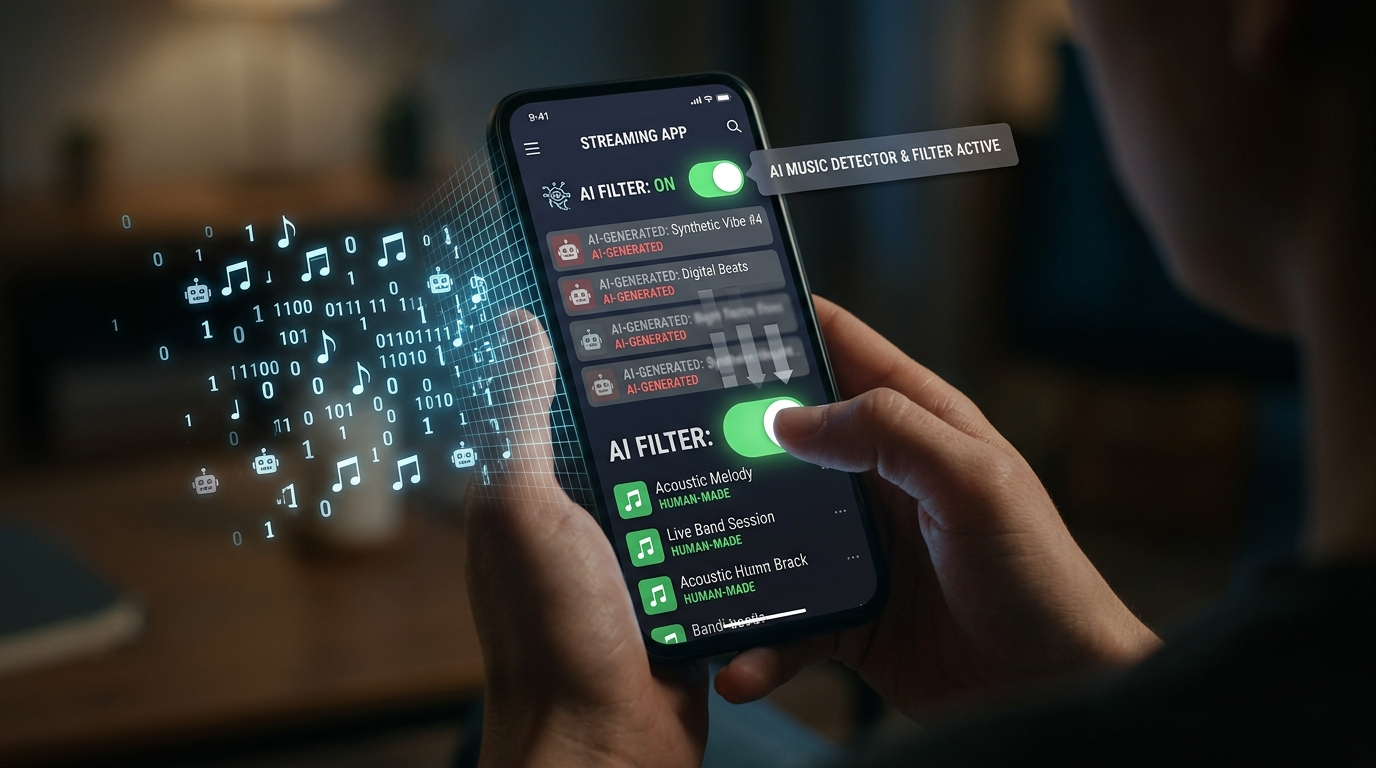
AI-made songs are spreading across streaming apps faster than most listeners realise. Two major services are now fighting back by introducing new tools. YouTube Music has started labelling AI-generated music, and Deezer is preparing a switch that lets you filter AI music out completely. If you want to find out whether the music you hear was created by a human or AI, here’s what’s changing and how you can check today.
How Big the AI Music Wave Has Become
The scale is striking. Deezer reported in July that it was receiving nearly 90,000 fully AI-generated tracks every day, according to TechCrunch. Some are uploaded in bulk to pick up streams in playlists, background music and recommendation feeds. Listeners often have no idea they are hearing them.
YouTube Music’s New AI Labels
Starting 14 October, YouTube Music displays an AI label beneath the track title on the player screen. It applies where AI played a significant role, including songs with AI-generated vocals. The tiers include Fully Gen AI and Partly Gen AI, and tapping the label explains how AI was used.
YouTube says it worked with music partners and used its own detection tools. The labels will later reach the main YouTube app. There is one big limit, though.
Deezer’s Filter Goes Further
Deezer has taken a stricter line. It already excludes detected AI-generated tracks from algorithmic recommendations and editorial playlists, while withholding royalties for fraudulent streams. Its new toggle, still in development, will stop AI-generated tracks, albums and related artists from appearing in your search results, as TechCrunch reported.
Deezer says demand is clear. In its research with Ipsos, around 45% of streamers wanted a way to filter AI music, and 80% wanted fully AI-generated tracks to be labelled.
Where Spotify and Apple Music Stand
The industry is moving at different speeds. Spotify launched a voluntary AI label earlier this year, and Apple Music is reportedly preparing AI tags. Bandcamp went furthest, banning AI-generated music outright. For most Australians, who rely on Spotify, Apple Music or YouTube Music, a full filter is not yet available, so a little detective work still helps.
How to Spot and Avoid AI Tracks Today
- Check the labels in YouTube Music and Deezer before saving a song.
- Look at the artist profile. Brand-new artists with huge catalogues, no photos, no tour dates and no social media are a common warning sign.
- Follow artists directly rather than relying only on auto-generated mixes.
- Use your app’s feedback tools to dislike or hide tracks you do not want.
Feed controls are becoming a theme across apps. Our guide to Facebook’s new Your algorithm tool shows a similar shift in social media, and our [Link: best music streaming services in Australia] comparison can help you choose a platform.
Your Playlist, Your Choice
The rise of AI music is forcing streaming services to choose between openness and control. YouTube Music is betting on transparency, while Deezer is putting the off switch in listeners’ hands. Until every app offers a filter, knowing the warning signs is the best way to keep your playlists human.
Frequently Asked Questions
Is AI-generated music illegal?
No. Creating music with AI is generally legal, but copying real artists’ voices or work without permission can raise copyright and fraud issues.
Does AI music hurt real artists?
It can. When AI tracks capture streams and playlist spots, less money and attention flow to human musicians.
Can I filter AI music on Spotify?
Not completely yet. Spotify offers labels in some cases, but no full filter has been announced.
Are all songs with AI bad?
Not necessarily. Many artists use AI tools to assist with music production. The labels aim to give you the facts so you can decide.
Leave a Reply