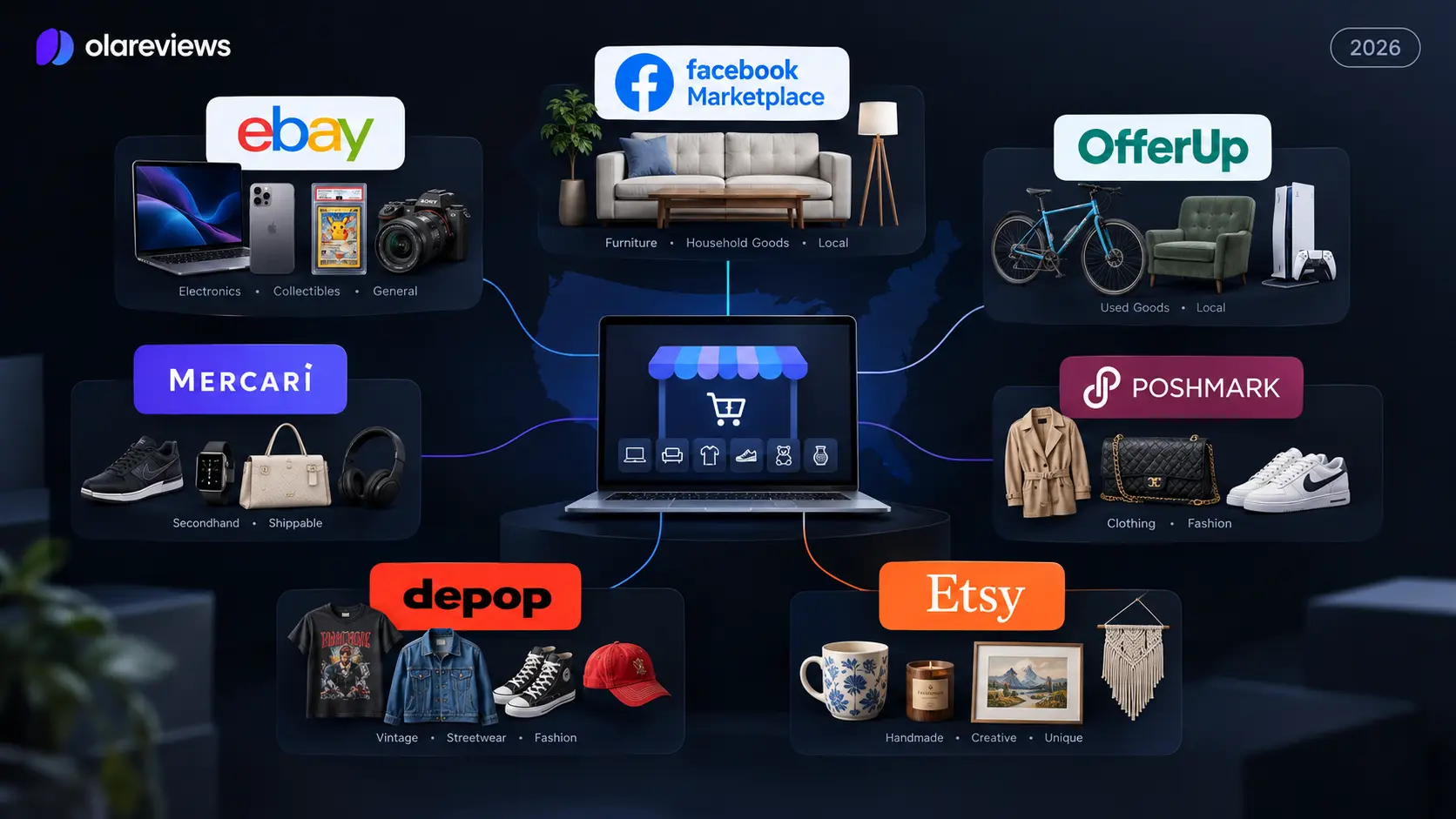
If you want to buy used products, sell unwanted items, start reselling, or grow a small ecommerce business, online marketplaces can give you access to established audiences without building your own store from the ground up. The right platform can make it easier to find buyers, process payments, arrange shipping, and manage listings.
The challenge is that every marketplace works differently. Some are designed for local pickup, while others are better for nationwide shipping. Some specialize in fashion or handmade products, while others support almost every category. In this guide, we compare seven of the best online marketplaces in the US in 2026 and explain which platform makes the most sense for different products and sellers.
What Are Online Marketplaces?
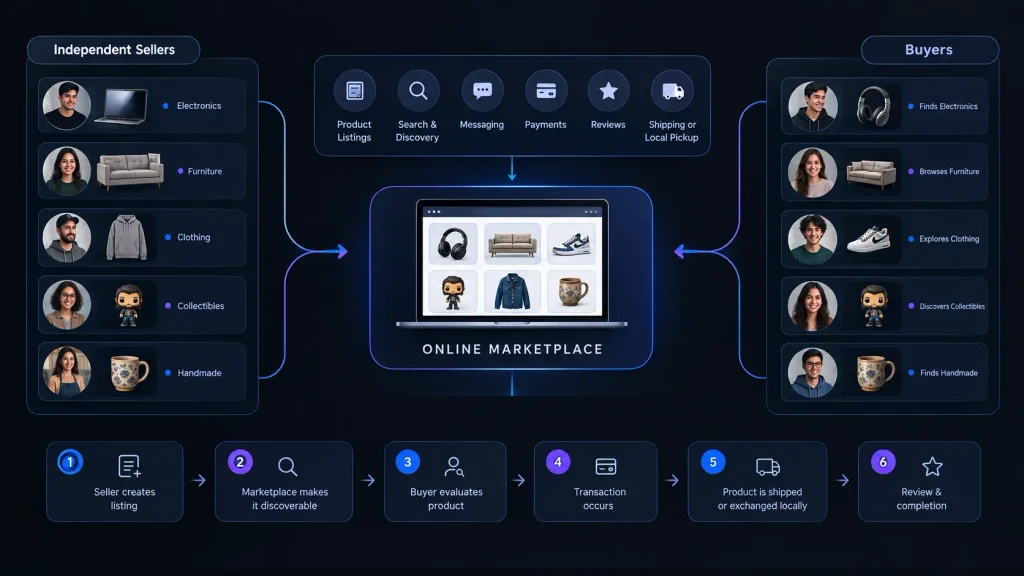
Online marketplaces are websites and apps where multiple independent sellers can offer products to buyers. Instead of creating a complete ecommerce website yourself, you use an established platform that already provides features such as product listings, search, messaging, payments, reviews, shipping, and buyer protection. After Olareviews research we have come up with the following products.
This model makes online selling easier for beginners because you do not need to build an audience from zero. A person selling an old sofa might use Facebook Marketplace, while someone selling collectible cards may choose eBay. A clothing reseller may prefer Poshmark or Depop, while a handmade-product business can build its shop around Etsy.
How Do Online Marketplaces Work?
Most marketplaces use a simple process where sellers create an account, list products with photos, descriptions, and prices, and choose shipping or local pickup. Platforms may charge listing, transaction, payment, or promotional fees, so sellers should understand these costs before listing to calculate their actual profit.
How We Evaluated These Online Marketplaces
We evaluated seven major platforms based on their current marketplace models, product categories, seller fees, buyer reach, fulfillment options, listing experience, and seller tools. The goal is to explain where each platform fits rather than simply ranking the biggest websites.
The main criteria included product suitability, selling costs, local versus nationwide reach, shipping options, seller tools, and ease of use. Current fee and policy information was checked against official marketplace documentation where available. Because these policies can change during 2026, sellers should always check the platform’s current fee page before making pricing decisions.
Best Online Marketplaces at a Glance
| Marketplace | Best For | Starting Seller Cost |
| eBay | Electronics, collectibles, parts and general products | Free within monthly listing allowance |
| Facebook Marketplace | Furniture, household goods and local sales | Generally free for local selling |
| OfferUp | Local used goods and furniture | Free basic selling |
| Mercari | General secondhand products | Free listing, 10% selling fee |
| Poshmark | Clothing, shoes and accessories | Free listing |
| Depop | Vintage, streetwear and fashion | No standard selling fee for US sellers |
| Etsy | Handmade, crafts and vintage products | $0.20 listing fee |
1. eBay | Best Online Marketplace for Broad Product Selection
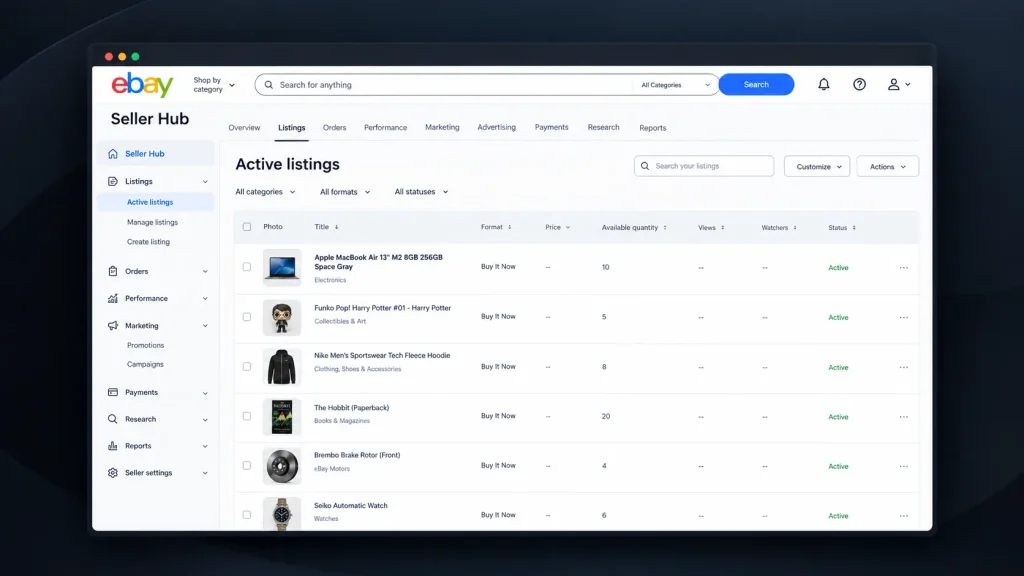
eBay is one of the most versatile online marketplaces because it supports a very wide range of products. Sellers can list electronics, collectibles, clothing, automotive parts, books, cameras, toys, sporting goods, musical equipment, and many other categories.
This broad selection makes eBay especially useful for resellers whose inventory changes frequently. Instead of building a separate selling strategy for every type of product, you can use the same marketplace for different categories. eBay also gives sellers access to nationwide buyers, making it more suitable for products that may not have strong local demand.
eBay Fees and Selling Experience
For most casual sellers, eBay currently provides 250 zero-insertion-fee listings per month. After those listings are used, additional listings generally cost $0.35 each. Final value fees vary by category, with most categories currently listed at 13.6% on the total sale amount up to $7,500, plus a per-order fee.
The important point is that sellers should calculate the total cost before setting a price. eBay can be particularly useful for specialized products because a national audience may be willing to pay more for something that is difficult to find locally.
Best for: Electronics, collectibles, automotive parts, clothing, books, toys, and general merchandise.
2. Facebook Marketplace | Best Online Marketplace for Local Buying and Selling
Facebook Marketplace is particularly useful when you want to sell products to buyers in your local area. It is a natural option for furniture, appliances, desks, televisions, exercise equipment, tools, and other products that can be inconvenient or expensive to ship.
One of the biggest advantages is convenience. Many potential buyers already use Facebook, so they can discover products without visiting a separate classified website. Buyers and sellers can communicate through Facebook, discuss the condition of an item, negotiate a price, and arrange pickup.
Facebook Marketplace for Bulky Products
Local selling can make a major difference for large products. Shipping a sofa or dining table across the country may destroy your profit, while selling it to someone nearby can make the transaction much simpler.
Facebook Marketplace also requires more attention to transaction safety because many sales involve direct communication and local meetings. Sellers should provide accurate descriptions, avoid sharing unnecessary personal information, and use sensible meeting or pickup arrangements.
Best for: Furniture, appliances, electronics, household goods, tools, vehicles, and other bulky products.
3. OfferUp | Best Online Marketplace for Local Used Goods
OfferUp is focused heavily on local buying and selling. It can be useful when you want to sell used furniture, electronics, bicycles, tools, household products, video games, and similar items to nearby buyers.
OfferUp says its basic buying and selling features are free, including posting items, browsing listings, communicating with users, and arranging local exchanges. The platform does not charge a commission for in-person transactions, although paid promotional and additional listing options can involve fees.
Why Choose OfferUp?
The main advantage is simplicity for local transactions. If you have an item that is difficult to ship, finding someone nearby can be more practical than trying to package and send it.
The downside is that your potential audience depends heavily on local demand. A rare product may perform better on a nationwide platform such as eBay, while common household items can be a good fit for OfferUp. Sellers should also use sensible safety practices when arranging in-person transactions.
Best for: Furniture, electronics, bicycles, tools, household goods, video games, and other used local products.
4. Mercari | Best Online Marketplace for General Secondhand Products
Mercari is designed for a broad range of secondhand products and can be useful when you prefer shipping rather than local meetups. Clothing, electronics, toys, collectibles, accessories, home goods, and smaller household products can all fit naturally into the marketplace.
Listing an item is free on Mercari. For new and updated listings, Mercari currently charges sellers a 10% selling fee based on the item price plus buyer-paid shipping. Buyers are also charged a 3.6% Buyer Protection fee based on the item price plus buyer-paid shipping.
Mercari Fees and Selling Strategy
The 10% seller fee means pricing needs to be calculated carefully. A seller should consider product cost, marketplace fees, packaging, shipping, and any other expenses before deciding how much profit is acceptable.
Mercari can be particularly useful for sellers with many smaller items that are easy to photograph, package, and ship. The platform is less dependent on finding a buyer within driving distance, which makes it different from local-focused online selling platforms such as OfferUp.
Best for: Clothing, electronics, toys, collectibles, accessories, home goods, and general secondhand products.
5. Poshmark | Best Online Marketplace for Clothing and Fashion
Poshmark is one of the most recognizable fashion-focused marketplaces in the US. Instead of competing across every possible product category, sellers can focus on clothing, shoes, handbags, accessories, beauty, and related products.
Listing is free on Poshmark. The current US fee structure is $2.95 for sales under $15 and 20% for sales of $15 or more. Poshmark also provides seller tools such as pricing features, My Closet Insights, Bulk Actions, My Shoppers, and Posh Shows.
Poshmark for Fashion Resellers
The specialized audience is a major advantage. Someone browsing Poshmark is already interested in fashion, which can make the platform more relevant than a general classified marketplace for clothing sellers.
The main consideration is the commission. A 20% fee on sales of $15 or more can significantly affect profit, especially for low-margin products. Sellers should therefore price products with the fee structure in mind rather than copying prices from local marketplaces.
Best for: Clothing, shoes, handbags, accessories, designer fashion, and fashion resellers.
6. Depop | Best Online Marketplace for Vintage and Streetwear
Depop has a more fashion-driven identity than general-purpose marketplaces. It is particularly popular for vintage clothing, streetwear, secondhand fashion, unique pieces, and trend-focused products.
For sellers in the US, UK, and Australia, Depop currently charges no standard Depop selling fee. However, US sellers pay a 3.3% plus $0.45 payment-processing fee through Depop Payments. Depop also has a 12% Boosting fee for qualifying boosted listings for US sellers on new listings from March 23, 2026.
Depop Fees and Listing Strategy
This fee structure makes it important to distinguish between normal selling costs and optional promotion costs. A seller can avoid the standard Depop selling fee but may still pay payment processing and potentially boosting costs.
Depop works especially well when the product has strong visual appeal. Good photographs, accurate measurements, brand information, condition details, and relevant style terms can help buyers understand what makes an item worth purchasing.
Best for: Vintage fashion, streetwear, sneakers, accessories, Y2K clothing, and trend-focused products.
7. Etsy | Best Online Marketplace for Handmade Products
Etsy is designed around unique, creative, handmade, personalized, and qualifying vintage products. This makes it very different from general marketplaces where sellers may list almost anything.
Etsy can be especially useful for small businesses that want to build a recognizable product collection. A seller could create a shop around handmade jewelry, personalized gifts, artwork, craft supplies, wedding products, or digital downloads.
Etsy Fees and Seller Strategy
Etsy currently charges a $0.20 listing fee, while its transaction fee is 6.5% of the total order amount. Other fees, including payment processing and optional advertising-related charges, can also apply depending on the seller and transaction. Sellers should therefore calculate their full cost rather than looking only at the listing fee.
The biggest opportunity with Etsy is specialization. A focused shop can develop a consistent visual identity, product range, and customer base. The biggest challenge is competition, so product photography, descriptions, pricing, reviews, and marketplace search optimization all matter.
Best for: Handmade products, personalized gifts, crafts, digital products, vintage goods, and creative businesses.
Online Marketplaces Comparison by Product Type
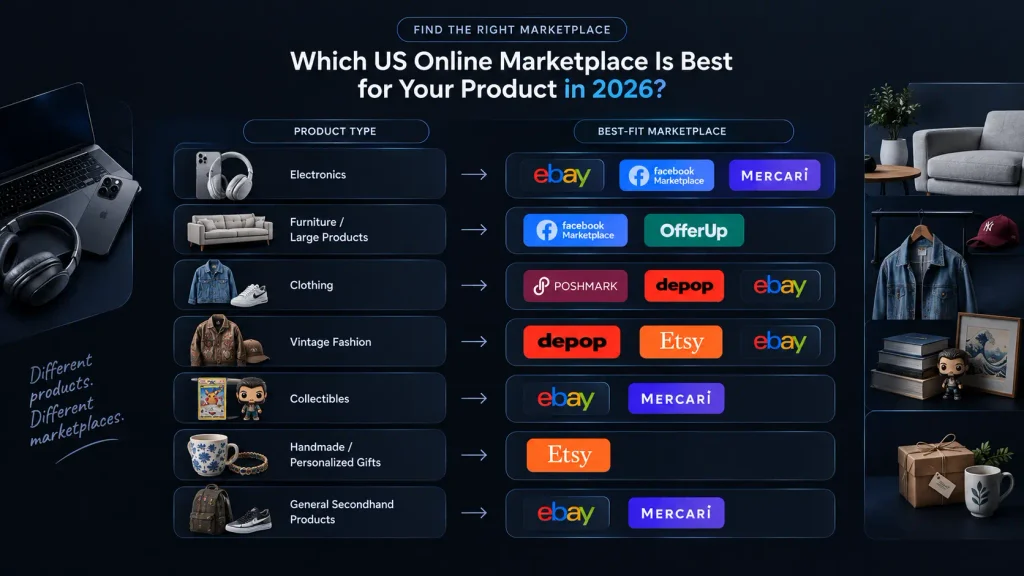
The easiest way to choose between different online marketplaces in the US is to start with the product you want to sell. A platform that works extremely well for fashion may not be suitable for furniture, while a local marketplace may be excellent for bulky goods but weak for specialized collectibles.
The following table gives you a practical starting point. It does not mean that a product can only be sold on one marketplace. Instead, it shows where the product category naturally fits.
| Product Type | Recommended Marketplaces |
| Electronics | eBay, Facebook Marketplace, Mercari |
| Furniture | Facebook Marketplace, OfferUp |
| Used household goods | Facebook Marketplace, OfferUp, Mercari |
| Clothing | Poshmark, Depop, eBay |
| Vintage fashion | Depop, Etsy, eBay |
| Collectibles | eBay, Mercari |
| Handmade products | Etsy |
| Personalized gifts | Etsy |
| Large products | Facebook Marketplace, OfferUp |
| General secondhand products | eBay, Mercari |
| Designer fashion | Poshmark, eBay, Depop |
How to Choose the Best Marketplace for Sellers
The best marketplaces for sellers depend on your products, customers, profit margins, and preferred selling method. A casual seller with one sofa has completely different needs from a reseller with 500 collectible products.
If you sell many different categories, eBay is a strong starting point because it offers broad product coverage and nationwide reach. If your products are large or expensive to ship, Facebook Marketplace and OfferUp can make more sense because local pickup can remove shipping costs.
Fashion sellers should consider Poshmark and Depop, while handmade and creative businesses can benefit from Etsy’s specialized audience. Mercari is another practical option for general secondhand products that are easy to package and ship.
How to Price Products for Online Selling
- Check the current market value: Price your product based on what similar items are selling for today, not what you originally paid. An item bought for $100 may now be worth $40, while rare collectibles can sometimes sell above their original price.
- Calculate all selling costs: Include marketplace fees, shipping, packaging, advertising costs, and your original product cost before setting the final price.
- Calculate your real profit: Subtract all expenses from the selling price to understand how much you will actually earn from each sale.
- Track your results: If you sell regularly, use a spreadsheet to compare sales and profits across different platforms and identify which marketplaces provide the best returns.
How to Create Better Marketplace Listings
A strong listing starts with a clear title. Instead of writing something vague such as “Nice Shoes,” provide useful information such as brand, model, size, color, and product type.
Photos should show the actual condition of the product. Include close-ups of labels, model numbers, damage, wear, accessories, and packaging when relevant. For clothing, measurements can be especially useful because buyers cannot physically try the item before purchasing.
Shipping vs Local Pickup
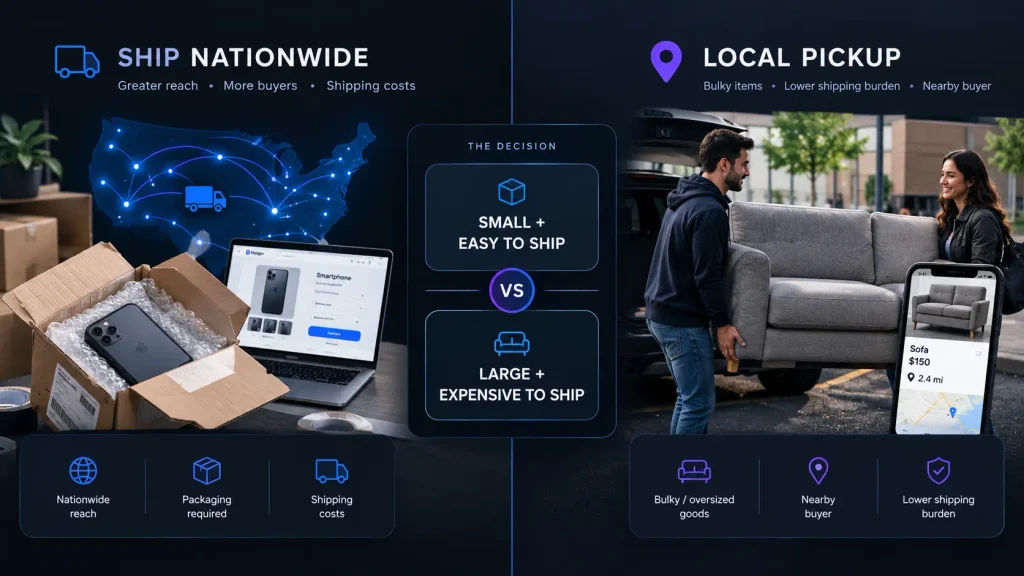
Shipping is useful when your product has buyers across the country or when the item is small enough to package economically. It allows sellers to reach a much larger audience than local-only selling.
Local pickup makes more sense for heavy, oversized, fragile, or inexpensive products where shipping could consume a large percentage of the selling price. Before choosing a marketplace, think about the complete fulfillment process rather than just the listing fee.
How to Calculate Your Real Selling Profit
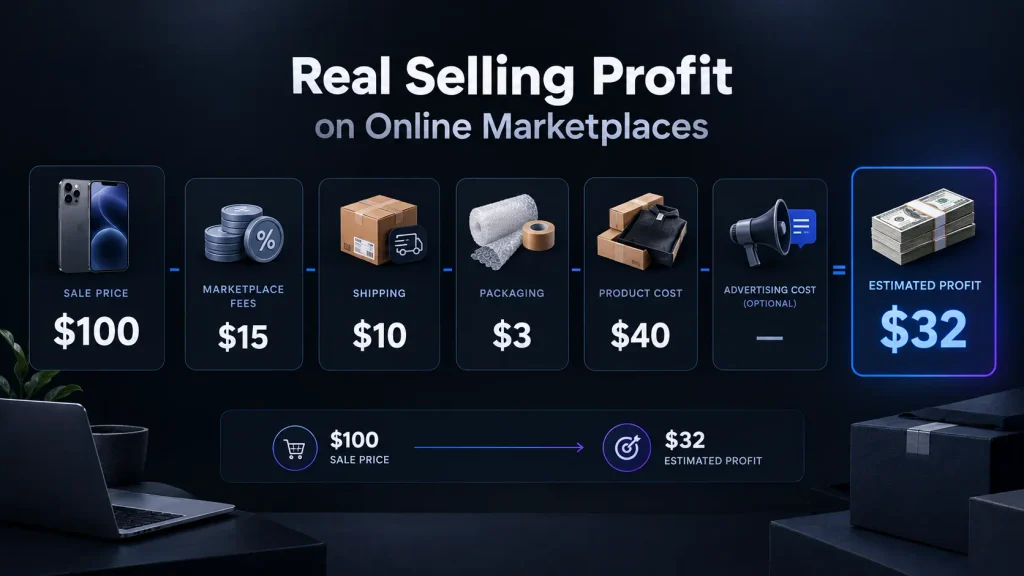
The selling price is not the same as profit. A marketplace may deduct a commission, while shipping and packaging can create additional expenses.
A simple formula is:
Sale Price − Marketplace Fees − Shipping − Packaging − Product Cost − Advertising Cost = Estimated Profit
For example, if you sell a product for $100 but pay $15 in marketplace fees, $10 for shipping, $3 for packaging, and $40 for the product itself, your actual estimated profit is $32.
How to Make More Money on Online Selling Platforms
One of the easiest ways to improve sales is to improve the listing before spending more money on advertising. Better photos, stronger titles, accurate descriptions, competitive pricing, and complete product information can make a major difference.
You should also review listings that receive views but do not convert into sales. If buyers are looking at an item but not purchasing it, the price, shipping cost, photos, product condition, or description may need improvement. Testing small changes can be more useful than simply creating more listings.
Buying Safely on Online Marketplaces
Buyers should also understand that marketplace transactions involve risks. Before purchasing an expensive product, check the seller’s reviews, account history, product photographs, description, and return or protection policies.
For local transactions, use sensible safety practices and avoid unnecessary sharing of personal information. Be particularly cautious if someone pressures you to move the transaction outside the marketplace, asks for unusual payment methods, or sends suspicious payment links.
Which Marketplace Should You Choose?
Choose eBay if you want broad product coverage and access to nationwide buyers. It is particularly useful for electronics, collectibles, parts, and products that may have limited local demand.
Choose Facebook Marketplace or OfferUp if your priority is local selling. These platforms are particularly useful for furniture, appliances, tools, and other products that are difficult or expensive to ship.
Choose Mercari for general secondhand products that you are comfortable shipping. Choose Poshmark or Depop if fashion is your main category, and choose Etsy if you make handmade, personalized, creative, or qualifying vintage products.
Final Thoughts
The best online marketplaces are not necessarily the platforms with the largest audiences. The right marketplace is the one that matches your product, target buyer, selling costs, fulfillment method, and business goals. eBay is a strong all-purpose option, Facebook Marketplace and OfferUp work well for local sales, Mercari is useful for general secondhand products, Poshmark and Depop specialize in fashion, and Etsy is a natural choice for handmade and creative products. If you are just starting with online selling platforms, choose one marketplace that fits your product, calculate your real profit after every fee, and learn what your buyers respond to. Once you understand the process, expanding to additional marketplaces can help you reach more customers without depending on a single sales channel.
Frequently Asked Questions
Is eBay good for beginners?
Yes. eBay is a good option for beginners who want to sell electronics, collectibles, clothing, parts, and other products to buyers across the US. Its broad product categories make it easy to start with different types of inventory.
Is Facebook Marketplace good for local selling?
Yes. Facebook Marketplace is particularly useful for local sales because buyers and sellers can arrange pickup directly. It works especially well for furniture, appliances, electronics, and other bulky products that are expensive to ship.
Is Mercari good for selling used products?
Yes. Mercari is a practical choice for general secondhand products such as clothing, electronics, toys, collectibles, and accessories. Listing is free, while new and updated listings are subject to Mercari’s 10% selling fee.
Is Etsy good for small businesses?
Yes. Etsy can be a strong option for small businesses selling handmade, personalized, creative, and qualifying vintage products. Its specialized audience can help sellers reach shoppers who are specifically looking for unique products.
What are online marketplaces?
Online marketplaces are websites and apps where multiple sellers can list products for buyers to discover and purchase. Examples include eBay, Facebook Marketplace, Mercari, Poshmark, Depop, and Etsy, with each platform serving different types of products and buyers.
Editorial disclosure: This article is independently written for educational purposes. Marketplace fees, policies, seller features, and shipping options can change, so sellers should confirm the latest terms on the official marketplace before listing products.
Leave a Reply