Waymo Will Use Toyota Robotaxis in Japan and the UK
Waymo’s driverless cars have become a familiar sight in a growing list of American cities. Now the company is lining up a new vehicle for its push overseas, and it is turning to the world’s biggest carmaker to build it. Waymo and Toyota have announced that Toyota will manufacture self-driving versions of its electric bZ4X SUV, starting with tests in Japan next year and plans for the UK. Here, we explain what the Waymo Toyota robotaxi deal involves, how it fits Waymo’s international expansion, and what it could mean for drivers back home.
What the Two Companies Agreed
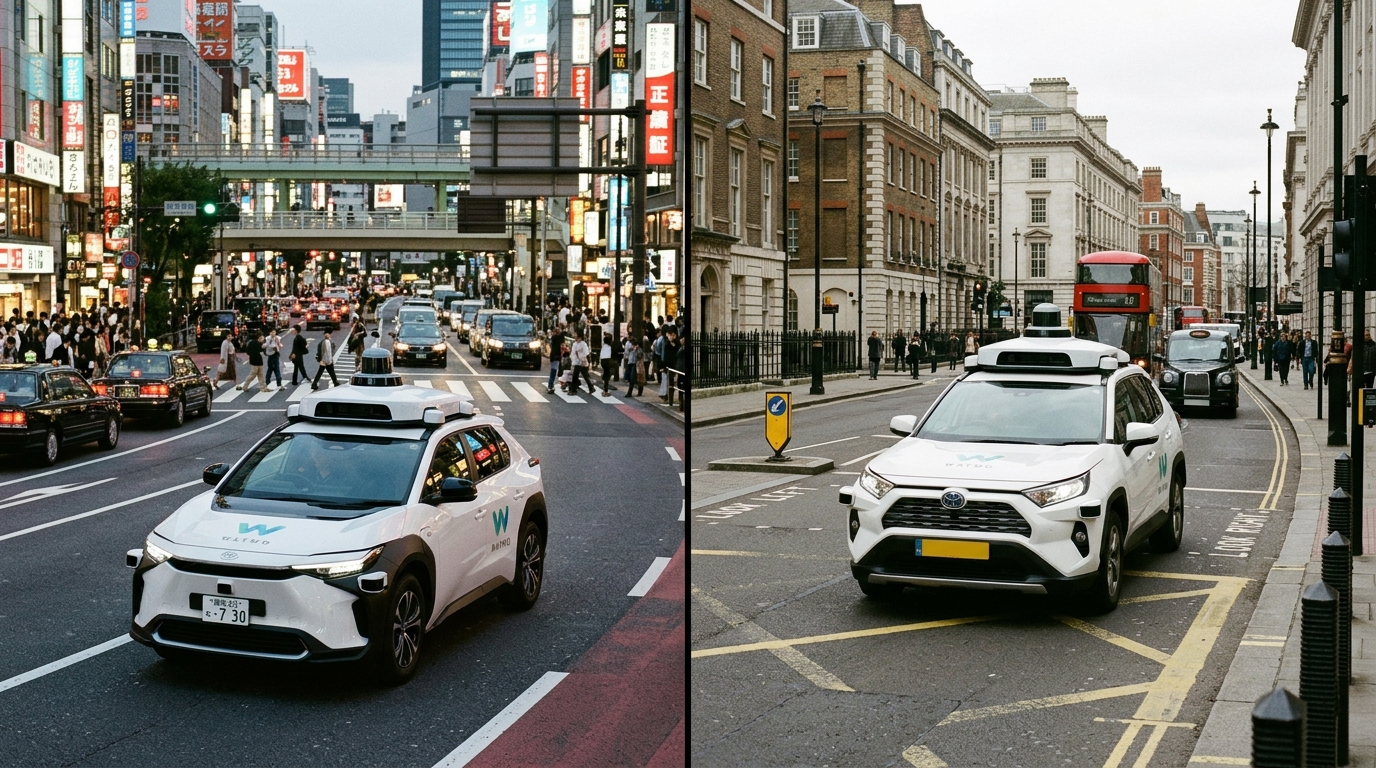
Under the partnership announced on October 30, Toyota will build 2027 bZ4X electric vehicles and fit Waymo’s sensors and computers on the production line at its Takaoka plant in Japan, as TechCrunch reported. Testing of the autonomous bZ4X fleet will begin in Japan in 2027, where Waymo hopes to eventually run a robotaxi service.
It follows an early-stage agreement Toyota and Waymo struck in April 2025. At the time, the language was vague. This announcement turns it into a concrete plan with a vehicle, a factory and a timeline.
Why Left-Side Driving Matters
The choice of countries comes down to which side of the road people drive on. Drivers in Japan and Britain keep to the left side of the road, which means the steering wheel sits on the right. Toyota’s bZ4X already comes in right-hand-drive form, which makes it a natural fit for those markets.
Waymo’s Jaguar I-Pace robotaxis have been on London streets in testing for some time, and a public service will follow once British regulators issue permits, according to The Driverless Digest. Waymo co-CEO Dmitri Dolgov declined to name other countries or give dates beyond Japan and the UK.
A Growing Mix of Robotaxis
The Toyota deal adds another model to Waymo’s increasingly varied fleet. The company already uses or plans to use:
- Jaguar I-Pace SUVs, the backbone of its current service
- Zeekr vehicles designed specifically for robotaxi use
- Hyundai IONIQ 5 models
- Toyota bZ4X, now joining the lineup for right-hand-drive markets
Having several vehicle suppliers gives Waymo more flexibility to match cars to local rules, road conditions and supply, and reduces its dependence on any single manufacturer.
Factory integration matters
One detail stands out. Instead of fitting sensors and computers after a car leaves the factory, Toyota will install Waymo’s system on the production line. That approach could make robotaxis cheaper and faster to build at scale, a key challenge for an industry that needs thousands of vehicles.
What It Could Mean for American Drivers
The most intriguing part of the deal may be its future possibilities. The companies said they are still studying whether Waymo’s driving system could one day appear in Toyotas that people buy for themselves. That would be a big shift. Today, Waymo’s technology is only available through its own robotaxi service, while carmakers sell driver-assistance features that still require a human to pay attention.
If that idea moves forward, it could eventually put advanced self-driving features into the kinds of cars ordinary Americans buy. For now, though, it remains an aspiration, with no timeline announced.
Toyota and Waymo also want to apply what the robotaxi fleet learns on public roads to make streets safer for everyone else, which could influence future Toyota safety systems more broadly.
Self-driving technology is advancing on several fronts. Our coverage of Tesla’s Cybercab plans and Tesla’s flying Roadster demo explores rival efforts. Our how robotaxis work guide explains the basics.
A Bigger Road Ahead for Waymo
The Toyota partnership gives Waymo a factory-built vehicle for its first right-hand-drive markets and a powerful manufacturing ally. It also opens the door, at least in theory, to self-driving technology in everyday cars. Watch the 2027 Japan tests closely, because they will show how quickly Waymo can take its robotaxis global.
Frequently Asked Questions
Testing of autonomous Toyota bZ4X vehicles is scheduled to begin in Japan in 2027.
The announced plans focus on right-hand-drive markets such as Japan and the UK. No US deployment has been announced.
The companies say they are exploring the idea for personally owned Toyotas, but no product or timeline has been announced.
Waymo has been testing in London and expects to open a public service after British regulators approve it.