The Royal Navy Commissions Its First Drone Boat Squadron: What the 1st Autonomous Squadron Does
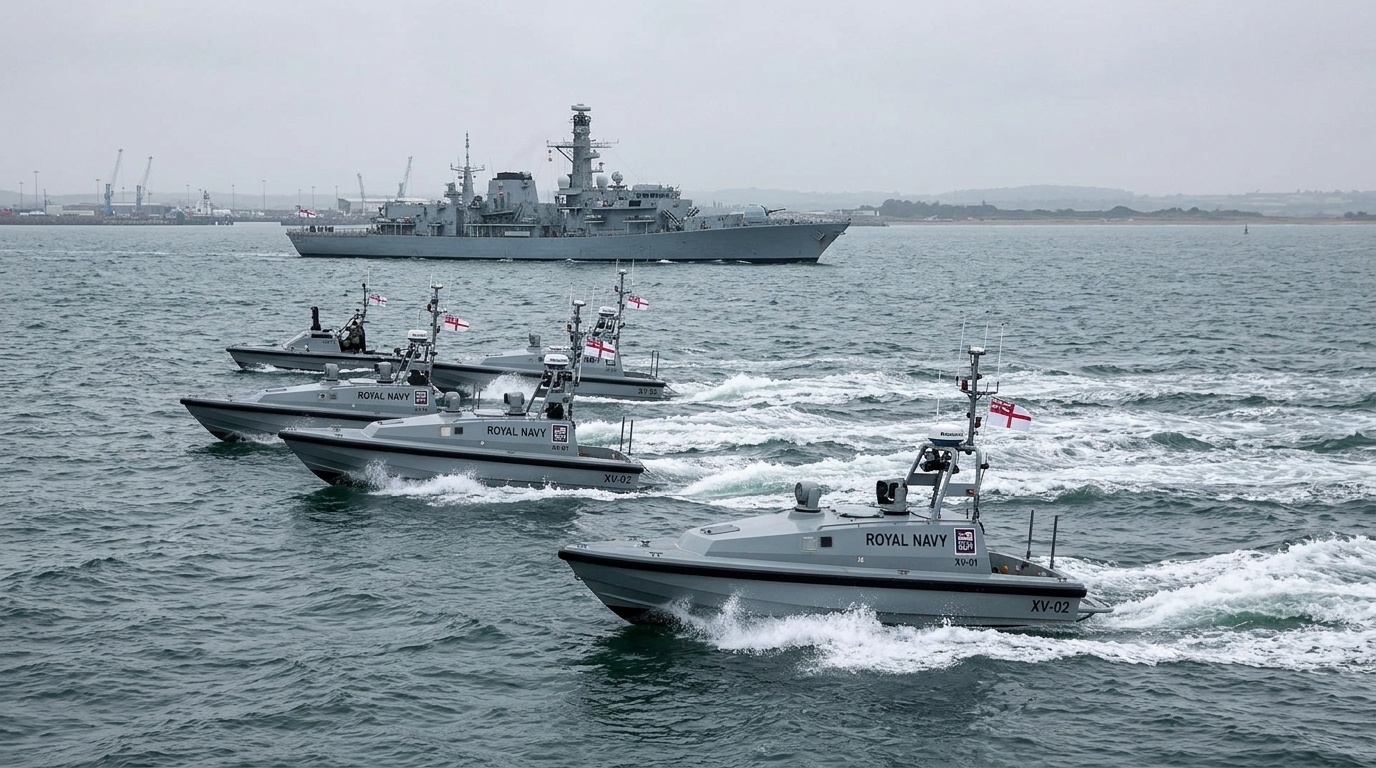
For centuries the Royal Navy has been defined by its ships and the sailors who crew them. This month it formally added something new to the fleet: a squadron of boats with nobody on board. The 1st Autonomous Squadron has been commissioned at Portsmouth, giving uncrewed vessels permanent operational status for the first time. Interest in the Navy has climbed sharply as the news spread. Here we explain what the Royal Navy autonomous squadron actually is, why Royal Navy drone boats matter, and what else the service is testing.
A First for the Fleet
The 1st Autonomous Squadron was formally commissioned in a ceremony at His Majesty’s Naval Base Portsmouth, held on 5 November, with the service making it public four days later on 9 November, according to USNI News. More than 200 personnel, dignitaries, families and guests attended.
Fleet Commander Vice Admiral Steve Moorhouse marked the moment by saying that an autonomous squadron now takes its place alongside the Navy’s traditional units.
The significance is structural rather than symbolic. Until now, uncrewed boats were used in trials and experiments. Commissioning a squadron gives them a permanent place in the fleet, with a formal identity, personnel and a role in operations.
What the Drone Boats Do
The squadron operates uncrewed surface vessels, boats that run without a crew aboard and are controlled remotely or operate semi-independently.
The Royal Navy has already tested craft such as the Rattler in swarming trials, using groups of small drone boats to watch foreign warships, as the UK Defence Journal reported. Typical roles for vessels of this kind include:
- Surveillance and patrol, keeping watch over wide areas of sea.
- Protecting larger ships by screening ahead of a task group.
- Dull or dangerous work, such as long monitoring missions or operating in areas where risking a crew would be unwise.
The appeal is straightforward. Drone boats are cheaper than frigates, can stay out for long periods, and put no sailors in harm’s way.
Part of a Bigger Push
The squadron is one of several moves in the same direction:
- Carrier drones. The Navy says strike drones have been launched from the aircraft carrier HMS Queen Elizabeth for the first time, a notable step for a fleet whose carriers normally fly crewed F-35 jets.
- A jet drone by 2027. The service plans to launch the Talon jet-powered drone from a carrier in 2027, according to Navy Lookout.
- The Atlantic Net. The Navy has announced an initial agreement for this project, which uses autonomous systems to monitor activity in the Atlantic.
Why the Timing Matters
The push comes as the Royal Navy’s traditional fleet shrinks. Reporting this year noted the service is down to a small number of frigates after several ships left service in July 2026. Uncrewed systems are increasingly presented as a way to cover more sea with fewer crewed warships.
That argument has limits. Drone boats cannot replace a frigate’s firepower, endurance or ability to operate independently far from home. Analysts generally see them as a complement to the fleet rather than a substitute for it.
What This Means for Britain
For taxpayers, the question is whether autonomous systems deliver more capability per pound than traditional ships. For the wider technology sector, it is a sign of growing demand for British autonomy, sensors and control software.
The move also reflects lessons from recent conflicts, where cheap uncrewed boats and aircraft have had an impact out of proportion to their cost.
For more on defence technology and AI, see our coverage of Google’s Gemini 4 Carbon cybersecurity model and Waymo’s robotaxi expansion. Our how military drones work guide explains the basics.
A Quiet but Significant Change
Commissioning a squadron of crewless boats marks a real shift in how the Royal Navy plans to operate, even if the vessels themselves are small. The test will be whether autonomy genuinely extends the fleet’s reach. Watch for the Talon carrier trials in 2027, which will show how far the Navy intends to take this.
Frequently Asked Questions
It is the Navy’s first permanently commissioned unit of uncrewed surface vessels, based at Portsmouth.
The ceremony took place on 5 November 2026 at HMNB Portsmouth, and the Navy announced it on 9 November.
Surveillance, patrol, protecting larger ships and missions that would be dull or dangerous for a crew.
Yes. It says strike drones have been launched from HMS Queen Elizabeth, and it plans to fly the Talon jet drone from a carrier in 2027.