Microsoft’s US$25 Billion Bond Sale Drew Over US$100 Billion in Orders: What It Means for AI
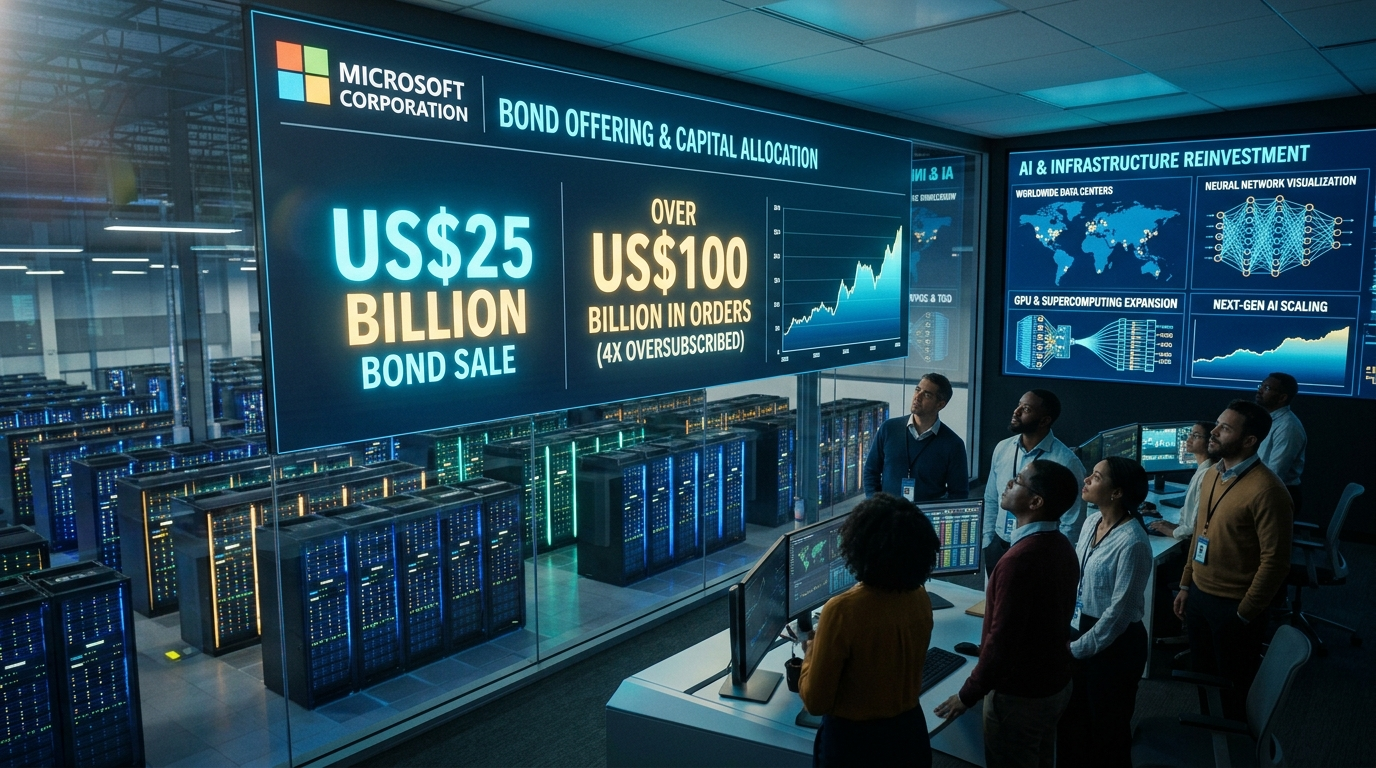
When one of the world’s richest companies decides to borrow money, investors pay attention. Microsoft has raised US$25 billion by selling bonds in the United States, its first such deal in more than nine years, and demand was so strong that orders reached more than four times the amount on offer. The news drew sharp interest in India too, where searches for the Microsoft bond sale jumped as investors tracked what it signals about the global AI boom. Here we explain what Microsoft did, why a cash-rich company is borrowing at all, and what it means for Microsoft AI spending and markets, including India. This is general information, not investment advice.
What Microsoft Did
Microsoft priced its bond offering on 29 October 2026, selling US$25 billion of senior unsecured debt in ten separate parts, according to Business Standard’s report on the deal. The parts mature at different times, from two years to 40 years, and include both fixed-rate and floating-rate notes. Fixed interest rates range from about 4.85% to 6.35%.
The sale is due to close on 4 November 2026. Three banks ran the deal: JPMorgan Chase, UBS and Wells Fargo.
Demand was enormous
At its peak, the deal attracted about US$115 billion of orders, about 4.6 times what Microsoft was selling, making it one of the most heavily subscribed corporate bond sales on record in the US. Microsoft last sold this kind of debt in 2017, when it raised US$17 billion.
Why a Cash-Rich Company Is Borrowing
Microsoft has plenty of money, so why borrow? The answer is the scale of AI spending. Big Tech companies are pouring record sums into data centres, chips and power to run artificial intelligence services. Even the largest firms are now turning to debt markets so they can keep investing without draining their cash reserves.
Chief financial officer Amy Hood told investors on the company’s earnings call that Microsoft would look for extra funding whenever terms looked favourable, in order to protect its cash flow and financial flexibility, as Reuters reported via The Star. Microsoft says the money is for general corporate purposes, which can include capital spending, acquisitions and share buybacks.
How Microsoft Differs From Its Rivals
What makes this deal stand out is Microsoft’s financial position. Unlike several of its peers, it still expects to bring in more cash than it spends this financial year, even while spending heavily. Alphabet recently reported negative free cash flow as AI costs climbed, as we explained in our analysis of Alphabet’s third quarter, and Amazon burned through a large amount of cash in its latest quarter, covered in our report on Amazon’s earnings.
Microsoft also holds one of the strongest credit ratings in the corporate world, which helps it borrow at relatively favourable rates. Even so, analysts noted it paid more for its longest-dated bonds than some other top-rated companies, a sign that investors remain cautious about the AI trade.
The Bigger Picture: AI Is Changing How Tech Is Funded
Microsoft is part of a wider trend. Technology giants and data centre developers have borrowed over US$313 billion by selling high-grade bonds globally this year, nearly three times the total for all of 2025, according to Bloomberg data cited by Business Standard. That borrowing has pushed global bond sales to record levels.
For investors, this raises important questions. Borrowing can help companies grow faster, but it also adds debt that must eventually be repaid. Whether the AI spending pays off will depend on how much revenue the new data centres and services generate in the years ahead.
What It Means for Indian Investors
For Indian readers, the deal matters for a few reasons:
- Global sentiment. Big Tech’s AI spending shapes moods across global markets, including Indian technology and IT services shares.
- IT services demand. Heavy cloud and AI investment by global giants can support demand for Indian technology services firms that help build and run these systems.
- Interest rates and flows. Large bond sales can influence global borrowing costs and investor flows, which indirectly affect emerging markets such as India.
Indian investors cannot buy these US bonds directly in most cases, but many hold exposure to US technology through international mutual funds or global stock investments.
AI spending is also driving up the cost of computer parts, as our report on the memory chip shortage explains. Our how bonds work for beginners in India guide covers the basics.
Borrowing Big to Build Bigger
Microsoft’s record-setting bond sale shows that even the strongest tech companies are now borrowing to fund the AI race. Investors clearly want in, but questions about long-term returns remain. Watch how Microsoft and its rivals turn this spending into revenue, because that will decide whether the AI borrowing boom pays off.
Frequently Asked Questions
How much did Microsoft raise in its bond sale?
Microsoft raised US$25 billion through a 10-part bond offering priced on 29 October 2026.
Why is Microsoft borrowing money?
To help fund heavy spending on AI infrastructure while preserving its cash flow and financial flexibility, according to its finance chief.
When does the Microsoft bond deal close?
Settlement is due on 4 November 2026.
Can Indian investors buy Microsoft bonds?
Direct purchase is usually difficult for retail investors in India, but international funds may provide indirect exposure. Consult a registered financial adviser before investing.