Amazon’s Record Profit Margin Wasn’t Enough: Why Shares Fell After Earnings
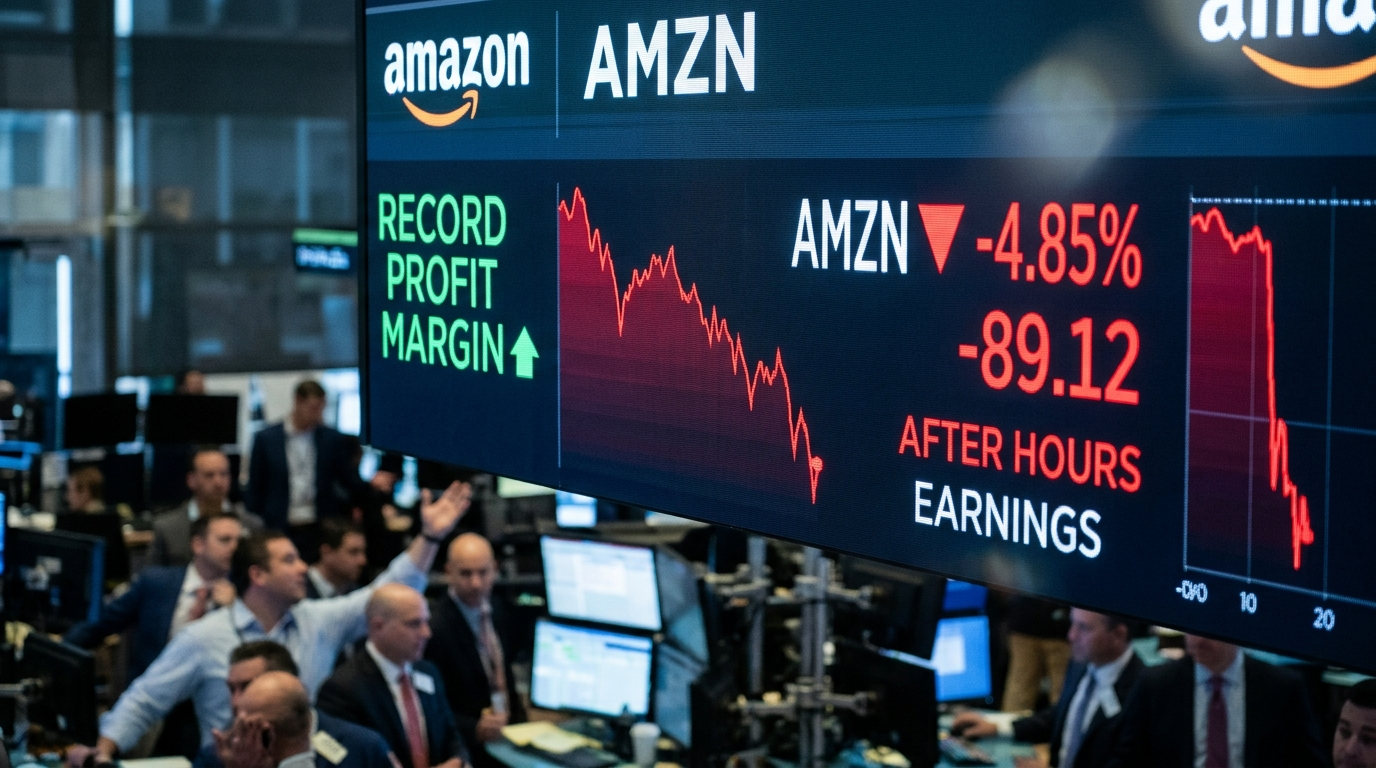
Amazon just delivered the most profitable quarter in its history, by one key measure, and investors still headed for the exits. Shares dropped sharply in after-hours trading on October 29 after the company’s third-quarter results narrowly missed Wall Street’s forecasts and revealed just how much cash it is pouring into artificial intelligence. The reaction mirrors what happened to Google’s parent company a day earlier. Here, we break down the Amazon earnings Q3 2026 report, why strong AWS growth was not enough to reassure investors, and what it signals about the AI spending race. This is general information, not investment advice.
The Results at a Glance
Amazon reported net sales of $201.9 billion, up 12% from a year earlier, which landed just below analyst estimates. Earnings per share came in at $1.89, short of the roughly $1.96 to $1.97 consensus, according to MarketBeat’s earnings summary.
The stock had already slipped during the regular session, closing at about $243.79. After the report, shares fell between 8% and 11% in extended trading, wiping a significant amount from the company’s roughly $2.6 trillion market value.
The Good News Investors Overlooked
On the surface, plenty went right. Operating income hit a record $28.1 billion, and the operating margin of 13.9% was the best the company has ever reported. That means the company is keeping more of each dollar of sales as profit than at any point in its history.
AWS keeps accelerating
Amazon Web Services, the cloud computing division that powers countless websites and apps, grew revenue 39% to about $46 billion, with roughly $17.8 billion in operating income, as 24/7 Wall St. reported. Businesses renting computing power to build AI products are fueling much of that demand.
The Problem: Cash Is Pouring Out
The bigger concern was cash. Amazon spent about $75.9 billion on capital expenditures in the quarter, mostly on data centers, chips and infrastructure, while the business generated about $42.4 billion in cash from operations, according to TheStreet. That works out to a cash burn of about $33.5 billion in a single quarter.
For investors, profit on paper matters less than whether a company is generating spare cash to fund growth, pay down debt or reward shareholders. When spending outruns incoming cash by that much, many start to question how long the strategy can last and when it will pay off.
A Pattern Across Big Tech
Amazon’s experience fits a wider pattern this earnings season. Alphabet’s shares also slid after its results, despite cloud revenue doubling, because of heavy AI spending and a miss on profit, as our analysis of Alphabet’s third quarter explains.
The message from markets is consistent. Investors still believe in AI demand, but they increasingly want evidence that enormous spending will turn into lasting returns. An Apollo economist recently argued that AI has delivered little financial payoff outside the biggest tech firms, which we covered in our article on AI’s “zero financial payoff”.
What It Means for Everyday Consumers
For shoppers, Amazon’s results change little in the short term. The retail business remains large and profitable, and the holiday season is approaching. Over time, though, the AI race could shape the services people use:
- Smarter shopping tools. Amazon is investing in AI assistants that help customers find and compare products.
- Cloud reliability. Heavy investment in data centers supports the many apps and websites that run on AWS.
- Rising hardware costs. Huge demand for AI chips and memory is pushing up prices for consumer devices, as our report on the memory chip shortage explains.
The delivery market is also consolidating, as seen in our coverage of DoorDash’s deal to buy Instacart. Our [Link: how to read a company earnings report] guide explains the key terms.
Record Profits, Rising Doubts
Amazon’s third quarter showed a business firing on many cylinders, led by a fast-growing cloud division and record margins. Yet the scale of its AI spending is testing investors’ patience. Watch cash flow and AWS growth in the coming quarters, because they will reveal whether Amazon’s massive bet on AI is starting to pay for itself.
Frequently Asked Questions
Earnings and sales narrowly missed forecasts, and the company’s heavy AI spending produced a large quarterly cash burn.
AWS revenue rose 39% to about $46 billion in the third quarter.
Yes. Operating income reached a record $28.1 billion, and margins were the highest in company history at 13.9%.
It is money spent on long-term assets such as buildings, servers and equipment. For Amazon, much of it now goes to AI infrastructure.