DoorDash Is Buying Instacart for US$17 Billion: What It Means for Shoppers
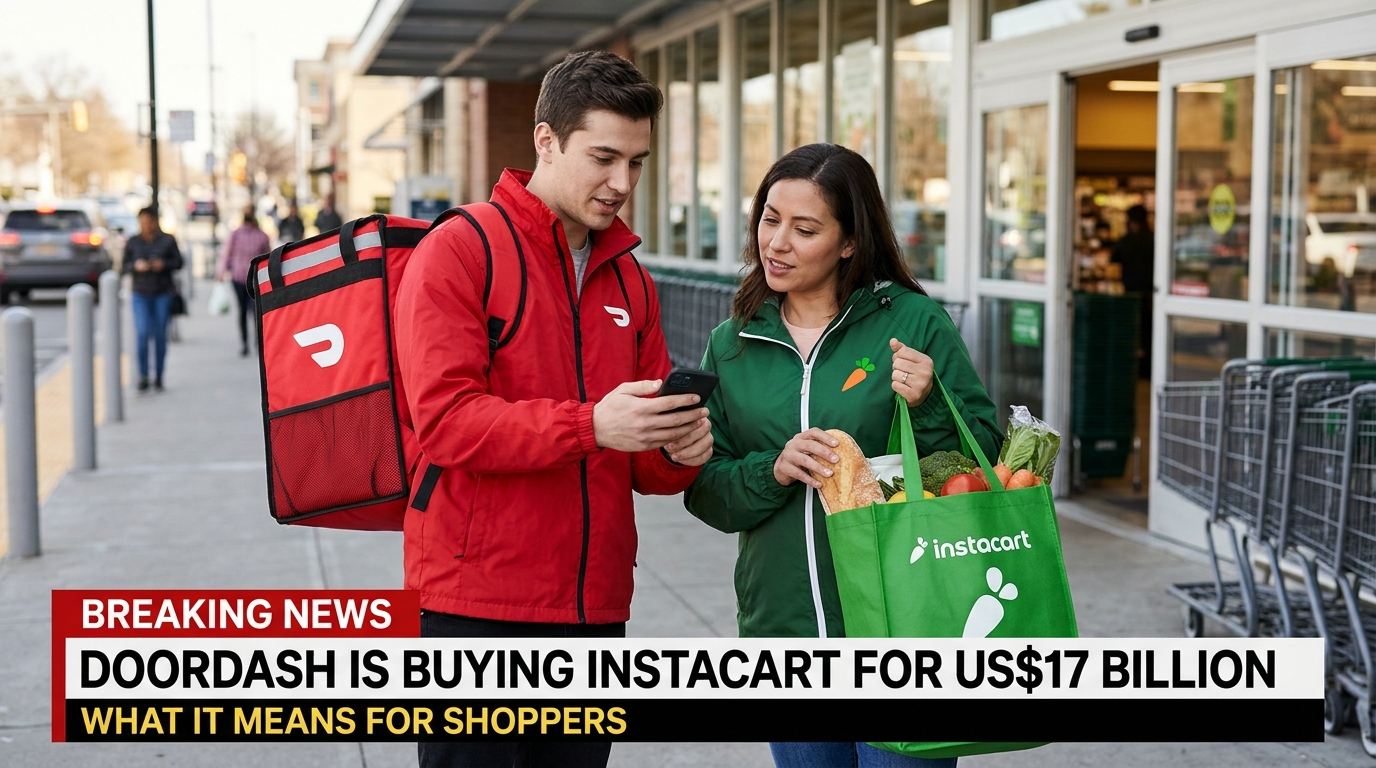
The two apps many Americans use to get dinner and groceries delivered are about to become one company. DoorDash has agreed to buy Instacart in a deal worth about $17 billion, bringing restaurant takeout and grocery delivery under a single roof. For shoppers, the headline promise is simple: more stores and one membership instead of two. For regulators, the deal raises questions about competition and pricing. Here, we break down the DoorDash Instacart acquisition, what changes for customers and gig workers, and why this grocery delivery merger will take more than a year to complete.
The Deal in Numbers
DoorDash will pay $65 for each Instacart share, valuing the grocery company at roughly $17 billion, according to DoorDash’s official announcement. That price is a 26% premium over where Instacart’s stock closed on October 22, before word of the talks leaked.
At least three quarters of the payment will be cash, with Instacart shareholders able to choose DoorDash stock for the rest. DoorDash plans to fund the cash portion with money it already holds plus new borrowing, and the boards of both companies have approved the agreement. Investors cheered: DoorDash shares jumped more than 6% in early trading, while Instacart’s barely moved, according to CNBC.
What Shoppers Can Expect
Nothing changes overnight. The two companies will keep running separately until the deal closes. After that, DoorDash has promised several benefits for customers:
- More places to shop. DoorDash says Instacart customers will gain access to over 50,000 extra stores, adding to roughly 100,000 that already use the platform.
- One membership. Members of DashPass and Instacart+ would pay a single fee rather than two.
- Familiar apps. DoorDash says it intends to retain the Instacart name, its app and its technology for retailers.
Those promises sound appealing, but details such as membership pricing have not been announced. We suggest holding off on changing subscriptions until the combined offer is clear.
What It Means for Gig Workers and Grocers
DoorDash has made early commitments to the people who keep both apps running. Instacart’s personal shoppers would still decide how often they work and which orders to accept, including whether to take DoorDash jobs. Grocery delivery will remain nonexclusive, meaning supermarkets can still work with competing platforms.
For grocers, the pitch is technology. Instacart builds websites, online ordering and advertising tools for retailers, while DoorDash brings a large delivery network. Combined, the company argues, smaller stores could compete better with retail giants that build their own systems.
Regulators Are Watching
Size invites scrutiny. The deal needs approval from Instacart shareholders and must clear US antitrust review, along with regulators in other countries. The companies expect completion sometime between late 2027 and mid-2028.
The timing is notable. On the same day the deal was announced, the Federal Trade Commission said it had opened an inquiry into how DoorDash, Instacart and seven other retail and transportation companies set prices, as CBS News reported. That probe is separate from the merger review, but it signals that federal officials are paying close attention to pricing in the delivery business.
Why This Deal Is Happening Now
Delivery has become a game of scale. Companies with more customers, couriers and partner stores can spread costs and offer faster service. DoorDash already dominates restaurant takeout, while Instacart leads grocery delivery. Together, they would offer one place to order a weekly grocery haul, a late-night meal and household essentials.
The move also reflects how the battle over shopping is changing. Retailers are rethinking how customers buy online, including through AI agents, a shift we explored in our report on Amazon and Walmart’s different approaches to AI shopping agents. Big acquisitions are reshaping other parts of the industry too, as our coverage of Salesforce’s purchase of Braze shows. Our how to save money on grocery delivery guide has tips for cutting costs.
Bigger Choice, Bigger Questions
DoorDash’s purchase of Instacart could make delivery more convenient for millions of Americans, with more stores and a single membership. It also concentrates a large share of the market in one company, which is why regulators will look closely. Keep an eye on membership pricing and the antitrust review over the coming months, because they will decide how much shoppers really gain.
Frequently Asked Questions
DoorDash says the Instacart name and app will stay after the deal closes.
The companies expect completion between late 2027 and mid-2028, subject to approvals.
DoorDash says members will pay one fee instead of two, but it has not yet shared pricing details.
Approval is not guaranteed. Antitrust authorities will review whether the combination harms competition.