Memory Chip Shortage: Why Phones and PCs Won’t Get Cheaper Before 2028
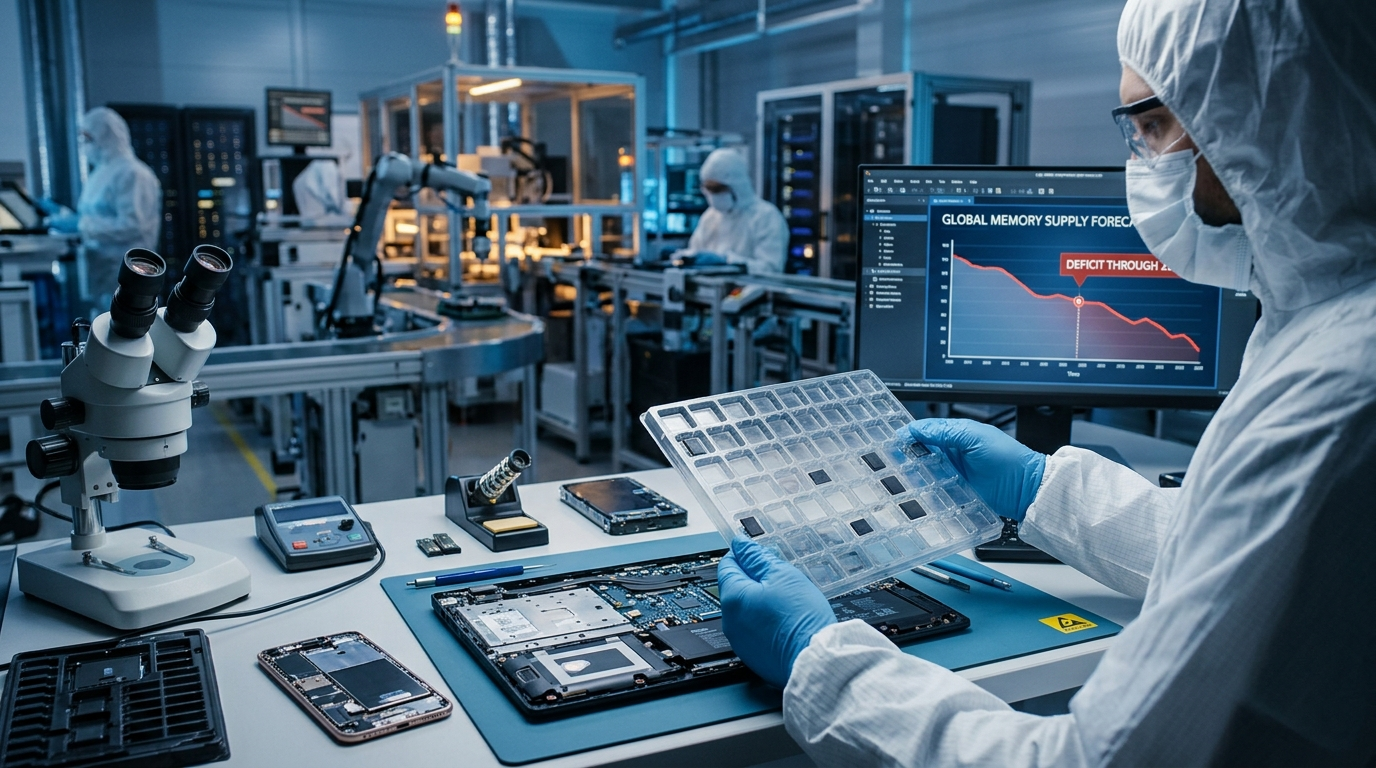
If you have been waiting for laptops, phones or computer parts to get cheaper, Samsung has some unwelcome news. The world’s biggest memory chipmaker says the shortage pushing up prices will not ease until 2028 at the earliest, even as it posts record results. The cause is artificial intelligence. Data centers are buying up specialized memory, leaving less for the devices most of us use every day. Here, we explain what is behind the memory chip shortage, how much RAM prices in 2026 have already climbed, and whether it makes sense to buy now or wait.
Why AI Is Eating Your Memory Supply
Every phone, laptop and game console needs memory chips called DRAM to run apps and store data temporarily. The same few companies, chiefly Samsung, SK Hynix and Micron, also make high-bandwidth memory, or HBM, which sits next to the AI processors inside data centers.
HBM is far more profitable, so manufacturers have shifted production toward it. The problem is that HBM chips are larger and more complex to make, so each one uses more factory capacity than ordinary memory. Samsung’s memory sales chief Jaejune Kim has described this shift as a physical constraint on supply, according to Android Headlines. More money for AI chips means fewer chips for everything else.
How High Prices Have Climbed
The jumps have been dramatic. Contract prices for memory have surged through 2026, with research firm TrendForce forecasting another rise of roughly 20% in the fourth quarter alone.
Device makers are passing those costs on. Gartner expects combined memory and storage prices to rise about 130% this year, lifting typical PC prices by about 17% versus last year. Memory now makes up a much larger share of the cost of building a computer than it did a year ago.
Fewer devices on shelves
Higher costs are also cutting production. Research firm IDC reported that global smartphone shipments fell 22% in the third quarter, the steepest drop on record, while PC shipments fell about 20%, as Shattered summarized. Budget phones have been hit especially hard, because memory represents a bigger slice of their total cost.
Why Relief Is Years Away
Building new chip factories takes years, not months. Several suppliers plan new production lines in 2027, but construction, equipment installation and testing mean meaningful extra output is not expected until 2028. Samsung’s own forecasts suggest the shortage could get worse in 2027 before it improves.
At the same time, AI companies keep signing long-term supply deals that lock up future production. Samsung has said its HBM capacity is effectively sold out through 2027.
What It Means for Your Next Purchase
For shoppers, the practical question is timing. Here is how we see it:
- If you need a device now, buying sooner probably beats waiting, since prices are expected to keep rising.
- Look for older models and holiday deals. Retailers clearing inventory bought before the latest price jumps can offer better value.
- Choose memory carefully. Buy enough RAM and storage for the next few years upfront, because upgrades and replacements will cost more later.
- Consider refurbished options. Certified refurbished laptops and phones can save a significant amount.
- PC builders should plan ahead. If a build depends on DDR5 memory, sourcing it early may avoid higher prices or limited stock.
Some new devices already reflect these pressures. Our guides to Apple’s M6 MacBook Pro and how to get an iPhone Duo cover recent launches. Big tech’s appetite for AI hardware is also visible in Alphabet’s latest earnings. Our best budget laptops guide compares current options.
Plan Purchases, Not Price Drops
The AI boom has turned memory chips into one of the most sought-after components on the planet, and everyday buyers are paying the price. With relief unlikely for at least two more years, waiting for cheaper gadgets may not pay off. When a new device is unavoidable, buy enough memory for the future, hunt for deals on older models, and avoid assuming prices will fall soon.
Frequently Asked Questions
Industry forecasts suggest no significant relief before 2028, with some warning the shortage could last longer.
Phone makers are paying far more for memory chips, and many are passing those costs on to buyers or cutting production.
If you need one soon, buying now is likely to cost less than waiting, given forecasts of continued price increases.
Consoles also use DRAM, so makers face the same higher costs, which can affect pricing and stock.