Chase Outage Explained: A Software Bug, and Why Zelle Payments Failed Everywhere
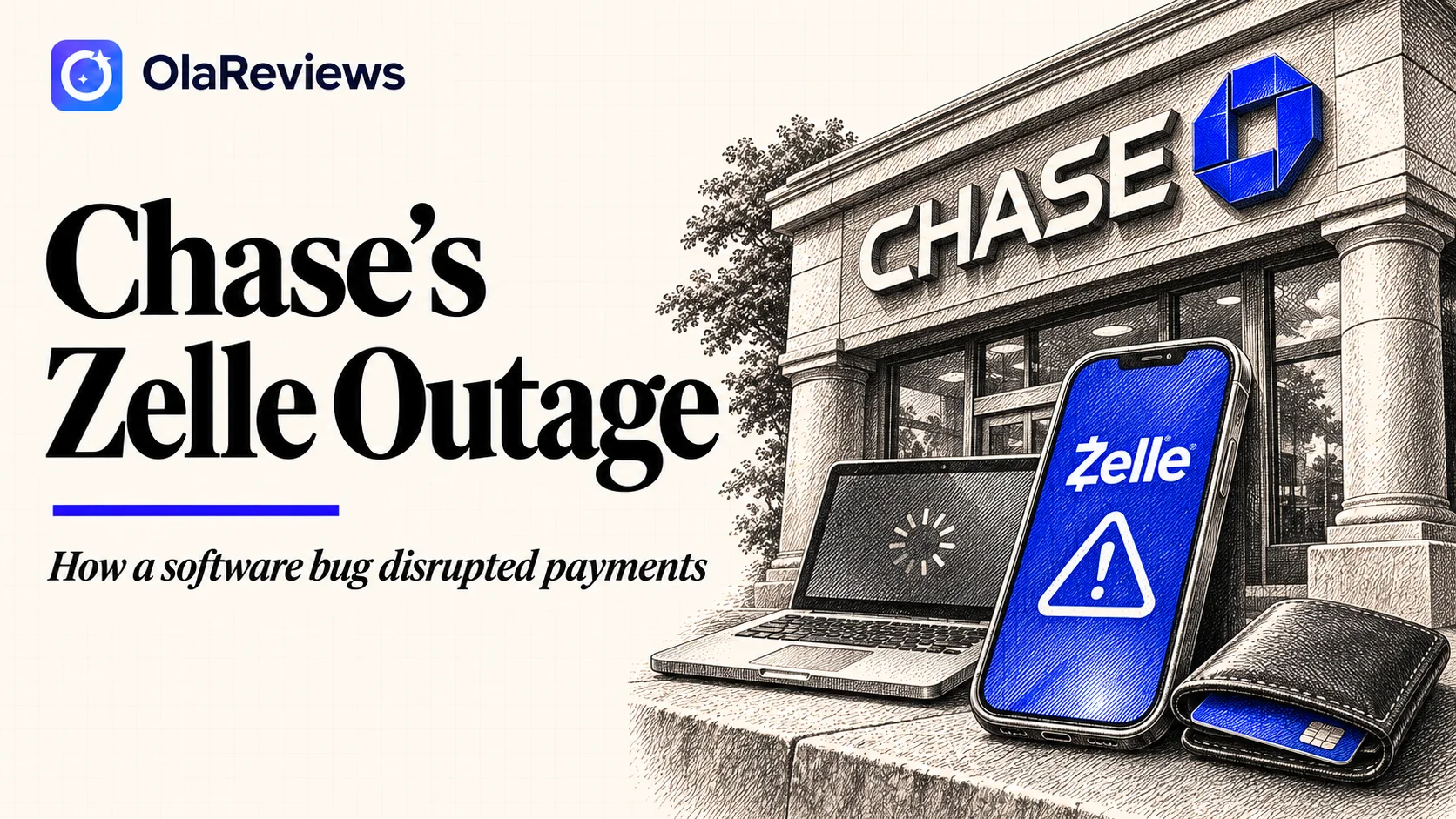
It has been a bruising few days for the systems Americans rely on without thinking. A nationwide aviation failure on Friday, a two-day Microsoft cloud collapse before it, and on Monday the country’s largest bank joined the list. A software bug inside JPMorgan Chase’s own hardware left customers unable to reach online banking and disrupted Zelle transfers nationwide. Here is what the Chase outage actually involved, why Zelle payments failed at banks that were working perfectly well, and what to do if a payment of yours is still missing.
What Happened
Problems began on Monday 16 November, as customers found they could not reach their online accounts or shift funds via Zelle, the near-immediate transfer service jointly owned by several large American banks.
The bank, the biggest in America, blamed a software fault in on-premise hardware, meaning kit it operates in its own facilities rather than rented cloud capacity. According to one person briefed on the incident, an update pushed to that in-house equipment set the problem off by accident.
It was not a cyberattack. The bank has been explicit on that point.
What was and was not affected
- Affected: online banking access, some branch transactions, and the processing of certain payments.
- Not affected: nobody was locked out of their money or their account balances.
- Resolved: by Monday evening, according to the bank, processing was back to normal.
The Zelle Confusion Explained
This is the part that generated the most frustration, and the most misunderstanding.
Downdetector filled up with complaints naming Chase and Zelle, yes, but also Wells Fargo, Bank of America, PNC, Capital One, Citigroup and US Bank. That made it look like the entire banking system had fallen over at once.
It had not. The operator behind Zelle, Early Warning Services, said its network was functioning as normal. Blame for the delays sat with particular banks, not the payment infrastructure.
The mechanism is straightforward. A Zelle transfer needs both the sending and receiving bank to respond. If one side is a Chase customer and Chase cannot process the request, the payment stalls, and the customer at the other bank sees a failure that looks like their own bank’s fault. US Bank put it exactly that way, noting its own platforms were fine while warning that anyone exchanging Zelle payments with a customer of another bank might still be held up.
Bank of America said its own operations were functioning normally. Wells Fargo did not immediately comment.
Four Failures in Five Days
The timing is what has unsettled people. Within a single week:
- The FAA ordered a nationwide ground stop on Friday 13 November, after a newly installed router malfunctioned, disrupting thousands of flights.
- Microsoft 365 went down for two days, taking Outlook, Teams and Copilot with it, as our report on that outage explained.
- United Airlines suffered its own system failure on Monday, covered in our separate report.
- Chase’s banking systems failed the same day.
No connection has been established between these incidents. They involved different companies, different technologies and, in Chase’s case, hardware the bank operates itself. What they share is a lesson rather than a cause: single points of failure inside enormous systems can take down services that millions of people treat as always available.
What to Do If a Payment Is Still Missing
- Check your account activity before resending. A stalled payment may still complete, and resending can send the money twice.
- Raise it with your own bank rather than Zelle if money is still in limbo, since that is where the hold-up lies.
- Tell the recipient if a deadline is approaching, such as rent or a bill.
- Keep screenshots of failed transactions, with times and amounts.
- Watch for scams. Outages attract fraudsters posing as bank support. No legitimate bank will phone you asking for your password, PIN or a one-time code.
Why Zelle Transfers Deserve Extra Care
One point worth remembering beyond this incident. Zelle payments are designed to be near-instant and are generally treated as irreversible, much like handing over cash. That is a reason to double-check the recipient before sending, and a reason not to rush a repeat payment during an outage.
For more on the banking and technology landscape, see our coverage of Microsoft’s two-day cloud failure.
A Bug, Not a Breach
The Chase disruption was a self-inflicted technical fault rather than an attack, and it was resolved within a day. The wider pattern is the more interesting story, with four significant failures in five days across aviation, cloud software and banking. Check your transaction history before resending anything, contact your own bank about stuck transfers, and ignore anyone who calls claiming to fix it for you.
Frequently Asked Questions
The bank points to a software fault in hardware it runs in-house, triggered after an update to that equipment. It insists no attacker was involved.
No. Its operator reported normal service and traced the delays to faults at particular banks.
Yes. The bank reported normal processing again by Monday evening.
A Zelle transfer needs both banks to respond. If the person on the other side banks with Chase, the payment could stall even though your own bank was fine.