Intel’s Stock Crash Wipes US$12 Billion Off the Government’s Stake: What Went Wrong
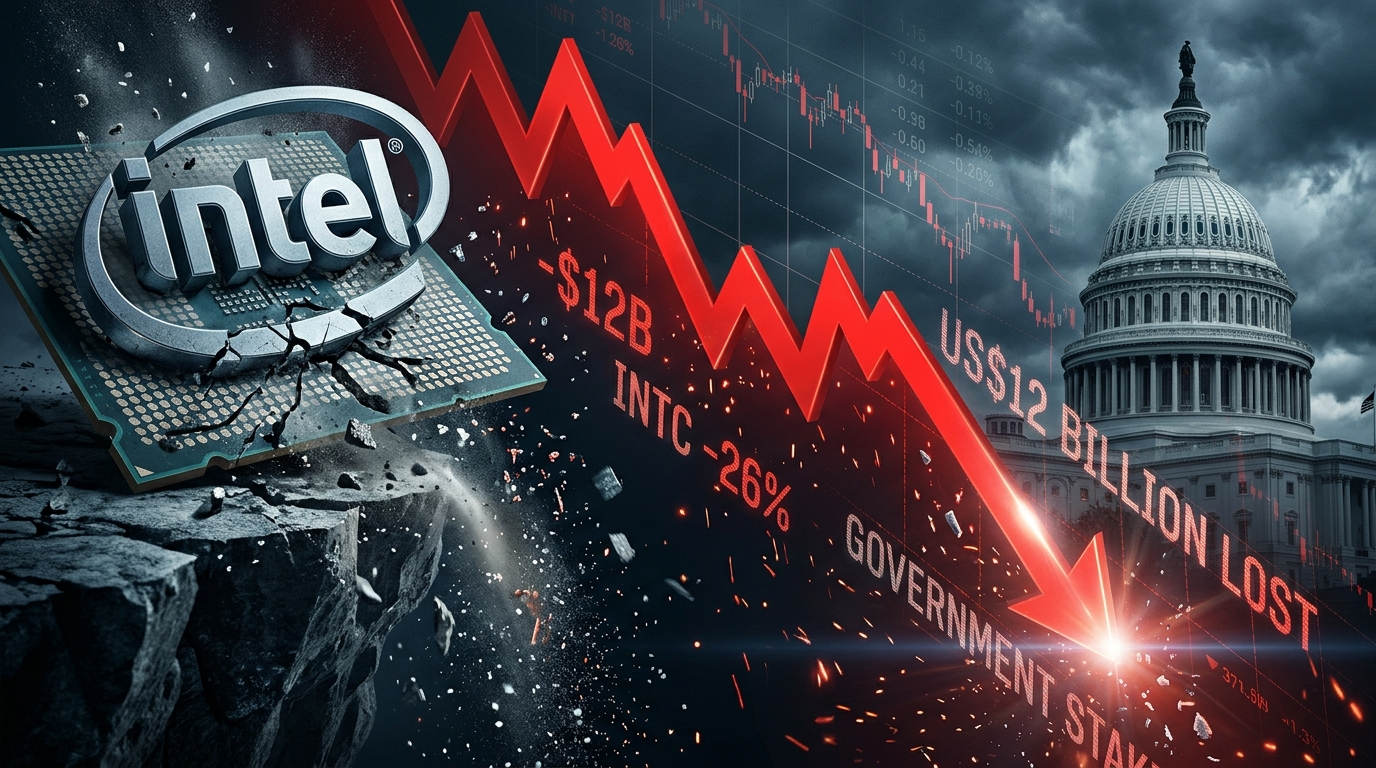
Intel had been one of 2026’s great comeback stories, with its stock more than doubling this year. Then, in a single trading session, nearly a third of that value vanished. Shares fell almost 30% on October 30 after the chipmaker issued a gloomy forecast, marking Intel’s worst day since the 1970s. The crash also hit an unusual shareholder: the US government, which owns roughly 10% of the company. Here, we explain what caused the Intel stock crash, what it means for the Intel government stake, and why your next PC is part of the story. This is general information, not investment advice.
What Sparked the Sell-Off
The trigger was Intel’s outlook for the final quarter of 2026. The company now sees fourth-quarter sales landing between $15 billion and $16 billion, well short of the roughly $17 billion analysts had penciled in, according to TechCrunch. It also forecast adjusted earnings of 25 cents a share, far below the 43 cents Wall Street expected.
Intel warned that its gross margin would slip to 37% from 43%, and that heavy investment meant it did not expect positive cash flow. That combination of weaker sales, thinner margins and continued spending spooked investors.
Two problems at once
Intel pointed to two main causes:
- A slumping PC market. Soaring memory prices, driven by AI demand, are pushing up the cost of computers and squeezing IT budgets. Intel predicts PC shipments will shrink by about 12% this year, then drop roughly another 10% in 2027.
- A factory shutdown in Israel. A deadly accident at one of its plants there has disrupted production, adding to the pressure this quarter.
CEO Lip-Bu Tan told analysts that customers had started signaling a slowdown as memory prices climbed and supplies tightened.
The Government’s $12 Billion Hit
The US government took a stake of roughly 10% in Intel in August 2025, paying about $9 billion. Friday’s collapse erased roughly $12 billion from that holding in a single day, as Benzinga calculated.
That sounds alarming, but the bigger picture is more nuanced. Even after the drop, the stake was still worth about three times what taxpayers paid, leaving a paper gain of roughly $19 billion. The government’s stake had been worth as much as $61 billion at the stock’s peak this summer. Nvidia, which also holds a large Intel stake, saw about $6 billion wiped off its position.
The Good News Buried in the Report
Not everything was bad. Intel’s third-quarter revenue actually rose 21% to about $16.5 billion, and its data center business grew 78% from a year earlier, as companies bought chips to power AI. The challenge is capacity. Intel needs more manufacturing space to meet that demand, and while one new Arizona plant is running, the next is not expected until 2028.
What It Means for PC Buyers
For everyday shoppers, Intel’s warning confirms an uncomfortable trend. Computers are getting more expensive because memory chips are in short supply, as AI data centers buy up production. That is pushing some buyers to delay purchases, which in turn hurts chipmakers like Intel.
A few practical takeaways:
- Prices may stay high into 2027, so waiting for bargains could backfire.
- Look for older models and seasonal sales, which can offer better value.
- Buy enough memory upfront, since upgrades will remain costly.
We explained the wider shortage in our report on the memory chip crunch. Other tech giants are feeling AI spending pressure too, as our analysis of Amazon’s latest results shows. Our best laptops under $1,000 guide compares current options.
A Comeback Story Hits a Wall
Intel’s record drop shows how quickly sentiment can turn when a company’s outlook disappoints, even after a strong run. The AI boom is helping its data center business while hurting its PC sales at the same time. Keep an eye on memory prices and Intel’s next forecast, because both will shape what you pay for your next computer.
Frequently Asked Questions
Intel forecast weaker-than-expected fourth-quarter revenue and profit, citing a PC slump caused by rising memory prices and a factory shutdown in Israel.
The government’s stake lost about $12 billion in value in one day, though it remains worth roughly three times its original cost.
Yes. It took a stake of roughly 10% in August 2025.
Intel expects PC weakness to continue into 2027 as memory costs stay high, so prices are unlikely to fall soon.