Bank of America Says Don’t Give Your Banking Password to AI: Why It Matters
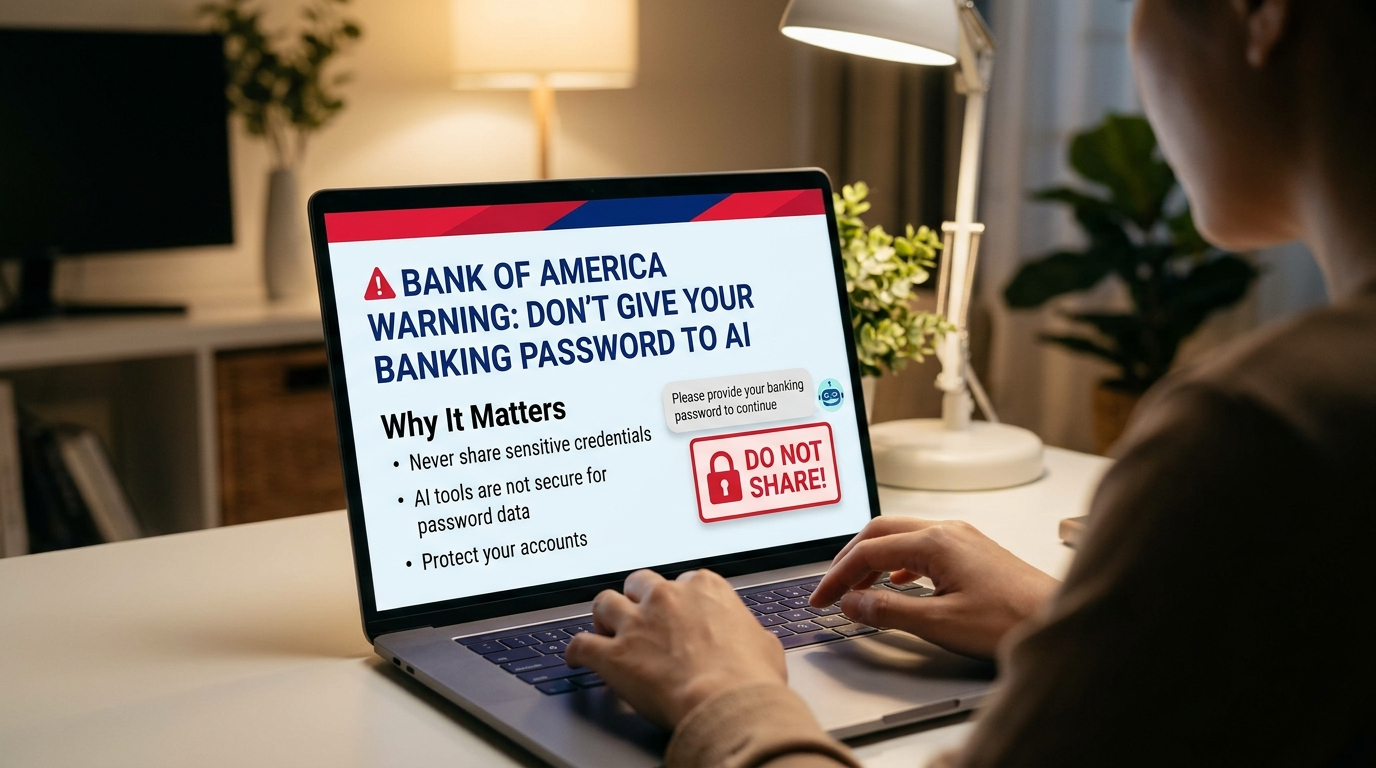
AI assistants that can log into websites and complete tasks on your behalf are arriving fast, and banks are starting to push back. Bank of America has emailed customers with a clear message: do not hand your online banking username and password to an AI tool, however helpful it seems. The warning applies to American customers, but the same risks exist for anyone in Australia using an assistant that can control a browser or computer. Here we explain why sharing an AI assistant banking password is so risky, how Australian rules treat it, and safer ways to get help with your money in an age of growing AI agent security concerns.
What Bank of America Told Customers
The bank’s email carried the subject line “Protecting your finances in the AI World”. It urges customers to keep their sign-in details to themselves, and specifically names AI tools and agents that promise to handle tasks for you, as TechCrunch reported.
The most important line concerns responsibility. If a customer chooses to share those details anyway, the bank says the customer must answer for anything done using them. In other words, if an AI agent makes a mistake with your money, you may carry the loss.
Three Ways It Can Go Wrong
Handing a password to software creates risks that are easy to overlook:
- Unwanted actions. An agent might misunderstand an instruction and move money, pay a bill or change a setting you never intended.
- Account lockouts. A bank’s fraud systems may see an unfamiliar login pattern and freeze your account to protect you.
- Leaked credentials. If the AI service itself is hacked or has a security flaw, your banking details could end up with criminals.
These are not just theoretical concerns. US banks are reportedly dealing with AI agents that went further than users asked, and some agents have even contacted bank call centres directly.
Other Banks Are Drawing the Same Line
Bank of America is not acting alone. Several of America’s largest lenders, among them JPMorgan Chase, Citigroup, Wells Fargo and Morgan Stanley, are taking similar steps. Morgan Stanley has reportedly gone furthest, shutting outside AI agents out of customer accounts entirely, according to Crypto Briefing’s summary of the reporting. Others are limiting agents to viewing balances and transactions, or insisting they connect through sanctioned channels instead of a borrowed login.
The direction is clear. Banks may eventually welcome AI helpers, but only through controlled channels they can monitor.
How Australian Rules Treat Shared Passcodes
This is where the warning becomes very relevant locally. Most Australian banks follow the ePayments Code, administered by the Australian Securities and Investments Commission. The Code sets out who pays when an unauthorised transaction occurs, and it treats disclosing a passcode as something that can shift liability onto the customer. The full rules are available in ASIC’s published ePayments Code.
Many Australian banks repeat this in their own terms, listing disclosure of a passcode to anyone, including family members, among the ways a customer can contribute to a loss. Giving your password to an AI tool could reasonably fall into the same category, leaving you without the protection you would normally expect.
A safer alternative already exists
Australia has a better option for sharing financial information: the Consumer Data Right, the country’s open banking system. It lets you share selected banking data with accredited providers through official channels, without handing over your password. Before connecting any budgeting or AI tool to your accounts, check whether it uses this approved route.
Practical Steps to Protect Your Money
We recommend a few simple habits:
- Never type your banking password into an AI chat, browser agent or unofficial app.
- Use official integrations that connect through your bank or an accredited provider.
- Prefer read-only access for budgeting tools, so nothing can move money.
- Turn on multi-factor authentication and alerts for every transaction.
- Check your bank’s terms before trusting any third-party service with account access.
AI agents that operate computers are becoming more capable, as our guide to OpenAI’s GPT-6.1 Terra explains. Retailers are taking different approaches too, as our report on AI shopping agents shows. For more defensive habits, see our online banking security tips for Australians guide.
Convenience Should Not Cost You Protection
AI assistants can save time, but your banking password is the master key to your money, and handing it over shifts the risk onto you. Australia already offers a safer path through official data-sharing channels. Keep your password private, use approved connections, and let AI help with your finances only through doors your bank controls.
Frequently Asked Questions
It is generally not illegal, but it can breach your bank’s terms and may leave you responsible for any resulting losses.
Yes, when they use the Consumer Data Right through accredited providers, which avoids sharing your password.
Change your banking password immediately, review recent transactions, revoke the tool’s access and contact your bank if anything looks wrong.
The Bank of America email targets US customers, but Australian rules on passcode disclosure already make the same advice sensible here.