Why Some 2026 Races Aren’t Over Yet: Runoff Elections Explained
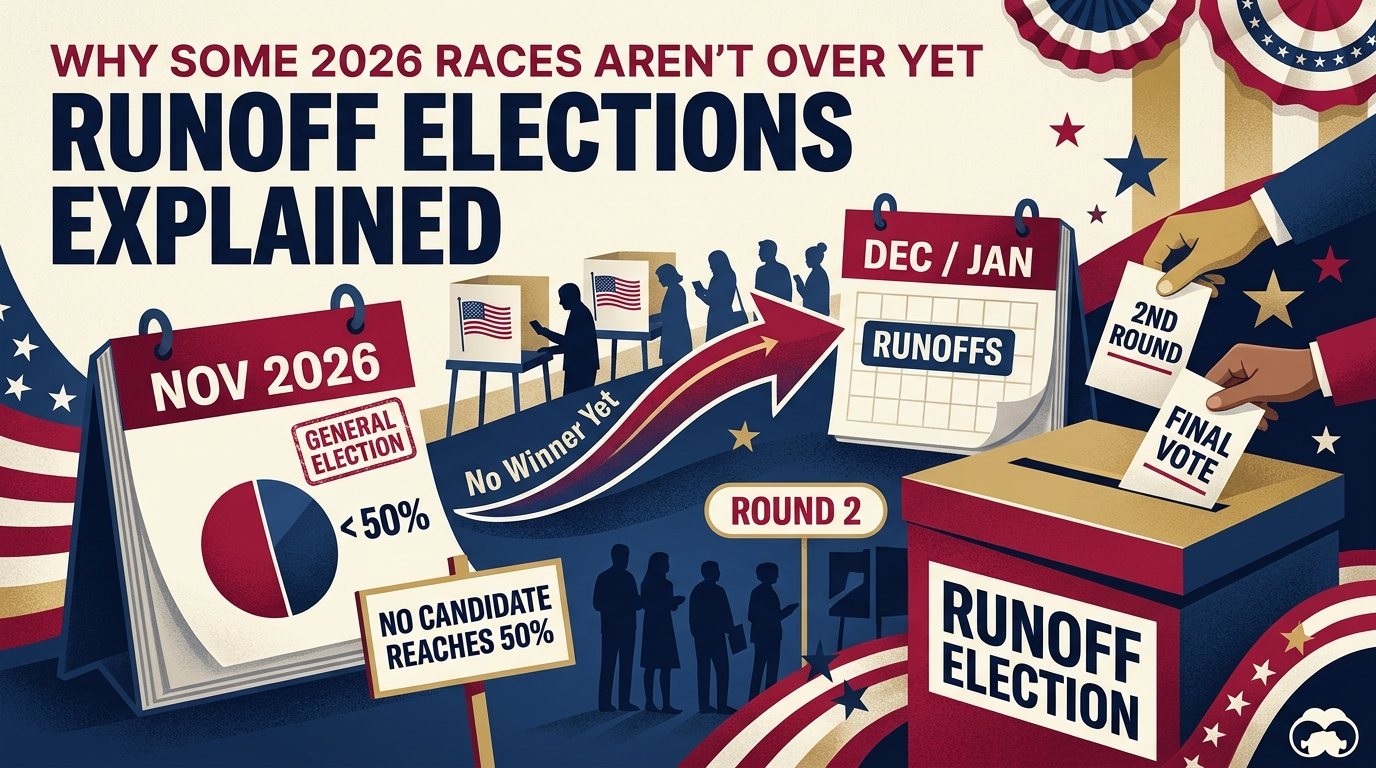
On election night, most voters expect to wake up knowing who won. In a few places, the answer may be “not yet.” Some contests require the winner to clear a majority of the vote, not just finish first, and when nobody does, voters have to come back for a second round. Searches for what a runoff election means rose sharply as results rolled in. Here, we explain how a runoff election works, which states use them in general elections, and the key dates to watch, with the essential details of a runoff election explained in plain terms.
What a Runoff Election Is
A runoff is a second election held when no candidate meets the required share of the vote in the first round. Usually, the top two finishers advance, and whoever wins the runoff takes the office.
Most US elections use a plurality rule, which means the candidate with the most votes wins, even if that is less than half. A runoff system instead requires a majority, typically more than 50% of the vote. The idea is that the winner should have support from more than half of the voters who took part.
Where Runoffs Happen in General Elections
Only a handful of states use runoffs for general elections. According to Ballotpedia’s overview, three states, Georgia, Mississippi and Louisiana, require them when no candidate reaches a majority in certain general election races. Everywhere else, a plurality is enough to win in November.
Georgia
Georgia has the most demanding system. It requires a majority in the general election for congressional, statewide and state legislative races. If no candidate crosses 50%, the top two meet in a runoff held 28 days later, according to state law summarized by the National Conference of State Legislatures. For 2026, that general runoff is scheduled for Tuesday, December 1.
Louisiana’s changing system
Louisiana has long used a system in which candidates from all parties appear on one ballot, with a December runoff if no one wins a majority. Starting in 2026, however, the state moved several offices, including congressional races, to party primaries, so those contests are now decided in November without a general election runoff. Some other state and local offices can still go to a second round.
Mississippi
Mississippi also requires runoffs in some general election contests if no candidate gets more than half the vote, though the rules depend on the office.
Local Runoffs Are More Common
Even in states without general election runoffs, many cities and counties have their own majority rules for local offices such as mayor and city council. Texas cities are a good example. Places like Corpus Christi can send local races to a runoff weeks after Election Day if no candidate wins outright. That is why some voters may see a second election on their calendar even when statewide races are settled.
Runoffs in Primaries
Runoffs are also used in primaries in several mostly Southern states, including Texas, Georgia, Alabama, Mississippi, Arkansas, Oklahoma, the Carolinas and South Dakota. Those primary runoffs for 2026 have already taken place earlier in the year.
Why Runoffs Matter
Runoffs can have big consequences. When control of a legislature or Congress is close, a single runoff can decide which party holds power. They also bring practical challenges:
- Lower turnout. Fewer people usually vote in a runoff than in the first round.
- Longer campaigns. Candidates must raise money and campaign for several more weeks.
- Voter fatigue. Some people may not realize they need to vote again.
How to Stay Informed
If a race in your area might go to a runoff, check your state or local election office website for official dates and voting details. Avoid relying on social media posts for election dates, which can be wrong or outdated.
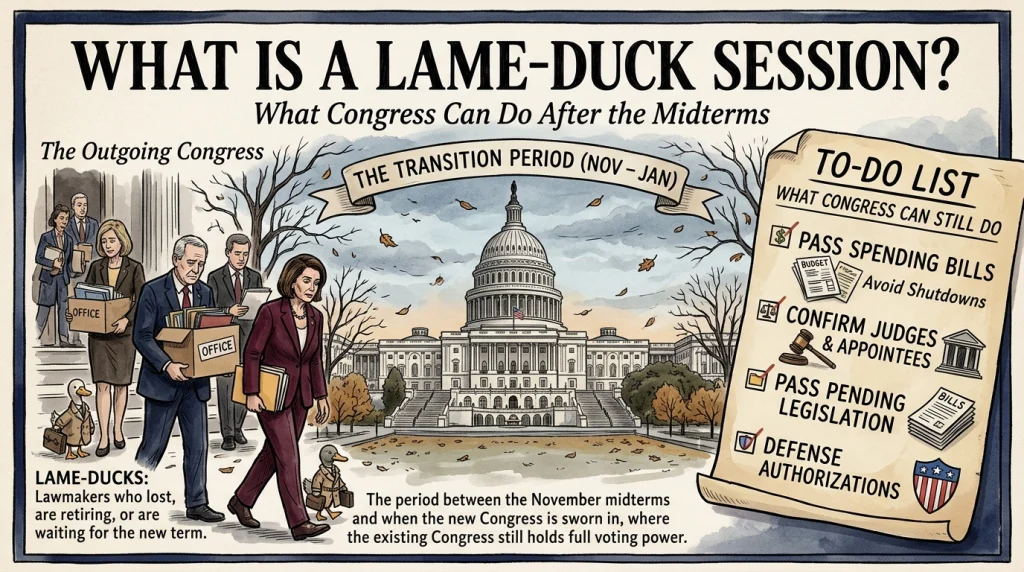
After the election, attention also turns to what the current Congress does before new members arrive, as our guide to the lame-duck session explains. Our how US elections are certified guide covers what happens next.
A Second Chance to Decide
Runoffs exist so that winners have the backing of a majority, not just the largest share of a split vote. In a close election year, they can extend the suspense for weeks. If your race is headed to a runoff, mark the date and plan to vote again.
Frequently Asked Questions
It is a second election held when no candidate wins the required majority in the first round. Usually, the top two candidates advance.
Georgia, Mississippi and Louisiana can hold general election runoffs for some races if nobody clears 50%.
It is scheduled for Tuesday, December 1, 2026, if needed.
Rules vary by state. Check your state or local election office for eligibility and deadlines.