What Is a Lame-Duck Session? What Congress Can Still Do After the Midterms
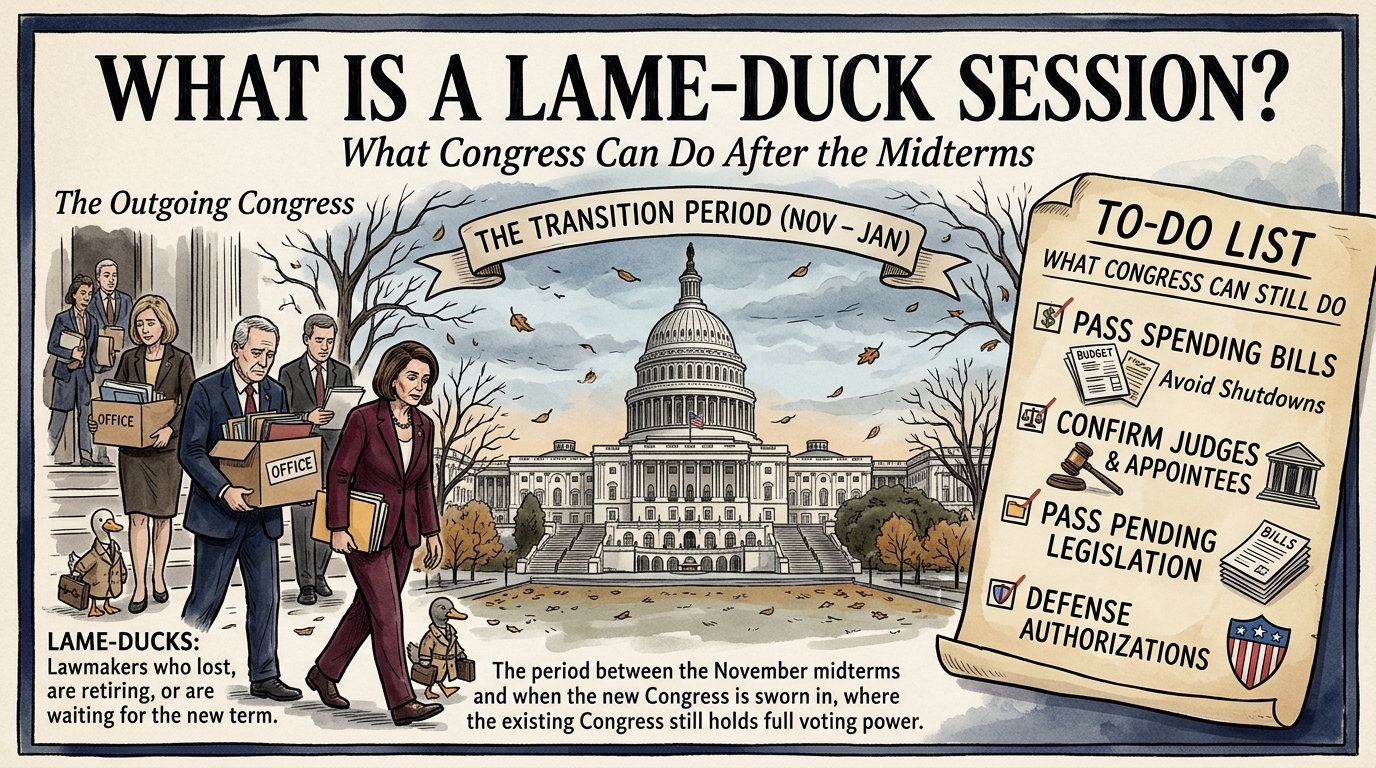
Election Day decides who will serve in the next Congress, but it does not end the work of the current one. Between now and early January, lawmakers who just won, lost or are retiring will return to Washington for what is known as a lame-duck session. This year’s could be unusually busy, with a government funding deadline looming and several major bills unfinished. Searches for the term climbed as results came in. Here, we explain what a lame duck is, the lame-duck Congress 2026 calendar, and what lawmakers may try to pass before the new Congress is sworn in.
What “Lame Duck” Means
A lame-duck session is the stretch of time after a general election and before the newly elected Congress takes office. During this period, the outgoing Congress still has full power to pass laws, approve spending and confirm nominees.
The term “lame duck” describes officeholders whose time in office is ending, either because they lost, retired or reached a term limit. Their votes still count until their terms expire.
The 2026 Calendar
Congress is scheduled to return on Monday, November 9, six days after Election Day, according to No Labels’ guide to the session. The session is expected to run until around Christmas, with a break for Thanksgiving.
The key dates are:
- November 9: Congress returns
- November 26: Thanksgiving break
- December 11: current government funding expires
- January 3, 2027: the 120th Congress is sworn in
The Biggest Job: Avoiding a Shutdown
The most urgent task is government funding. A temporary spending law, known as a continuing resolution, keeps most federal agencies running only until December 11, as Holland & Knight’s analysis notes. If Congress does not pass full-year spending bills or another short-term extension by then, parts of the government would shut down.
Lawmakers have two broad options: settle spending for the full fiscal year now, or pass another stopgap that pushes decisions into the next Congress. The election results may influence which path leaders choose.
Other Items on the To-Do List
Several other bills and deadlines compete for limited floor time:
- The annual defense bill, which sets military policy and spending priorities.
- A farm bill, covering agriculture and nutrition programs.
- An expired surveillance law, which lawmakers may try to renew.
- Health and social program extensions, including funding that expires at the end of December.
- Judicial and executive nominations, which the Senate can still confirm.
- A possible debt limit increase, which some Republican leaders have said could come up before January.
A tight window
With only a few working weeks and a holiday break, there is not much time. Some proposals face procedural hurdles, and lawmakers from both parties have signaled that only bills with broad support are likely to pass quickly. Republican plans for a larger party-line budget package, known as reconciliation, face steep odds in the time available, according to The Hill, which quoted Senate aides describing it as more unlikely than not.
Why Lame-Duck Sessions Can Be Controversial
Lame-duck sessions have a mixed reputation. Supporters say they allow Congress to finish essential work, such as funding the government, before the year ends. Critics argue that lawmakers who are leaving office are less accountable to voters, which can make some decisions harder to judge.
How much gets done often depends on the election outcome. If control of Congress is changing hands, the outgoing majority may try to pass priorities before it loses power, while the incoming majority may prefer to wait.
What It Means for You
For most Americans, the lame duck matters most through the funding deadline. A shutdown could delay some government services. Keep an eye on news in early December if you rely on federal programs or work for a federal contractor.
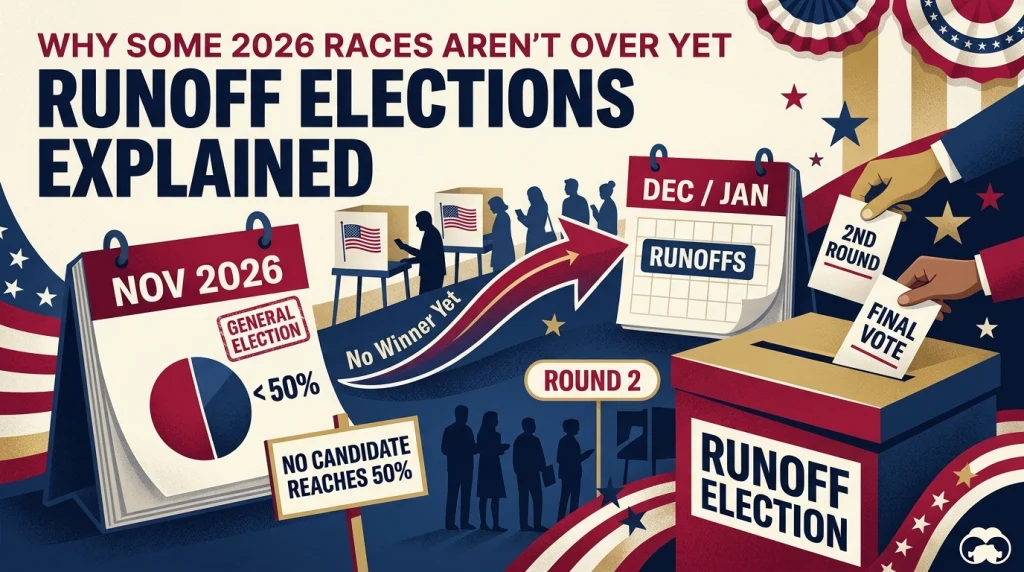
Some benefit payments run on fixed schedules, as our guide to November’s Social Security payment dates explains. For more on election night, see our explainer on why some races go to a runoff. Our how a bill becomes law guide covers the basics.
Unfinished Business Before the New Year
The 2026 lame-duck session gives the outgoing Congress a short window to keep the government open and tackle unfinished bills. With deadlines stacking up, the coming weeks could shape spending and policy well into next year. Watch the December 11 funding deadline, because it will set the tone for everything else.
Frequently Asked Questions
It is the period after an election and before the new Congress takes office, when the outgoing Congress can still pass laws.
Congress is scheduled to return on November 9, 2026.
Only if Congress fails to pass funding by December 11, 2026.
The 120th Congress takes office on January 3, 2027.