Meta Drops AI Scraping Clause After Publisher Backlash
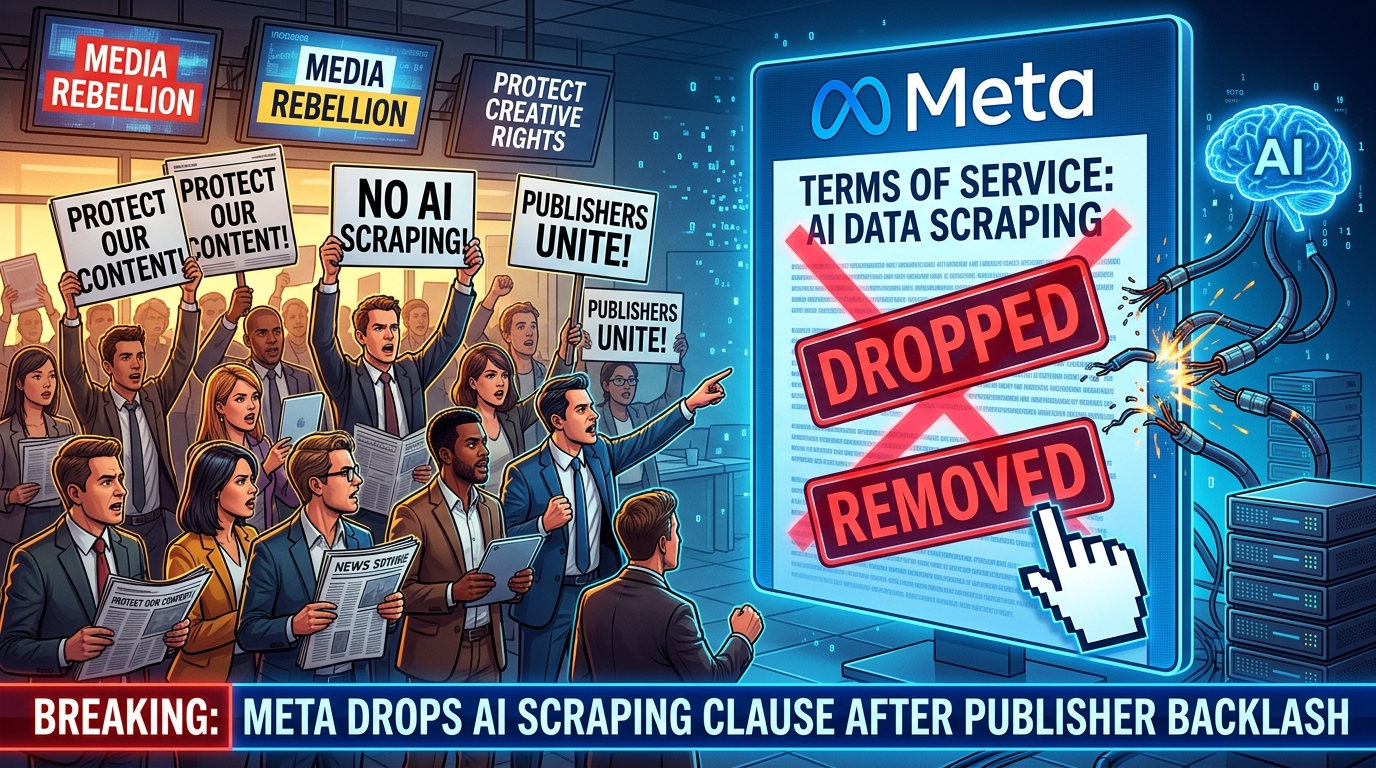
A single sentence in Meta’s business terms caused an uproar among publishers this month. The wording appeared to let Meta collect content from websites linked to business accounts and use it to train AI. After a wave of criticism, Meta has now removed it. The episode is a clear sign of how sensitive Meta AI scraping has become, and why AI scraping and publishers remains one of the biggest fights in tech. Here is what changed, what did not, and what website owners should do next.
What Meta’s Terms Originally Said
Meta updated its commercial terms, the rules that apply to businesses using its advertising and business tools. One clause said Meta could use content from a business account’s domains, web pages or URLs to “provide, develop, improve, research, train, and maintain the integrity of” its products and services.
Legal experts who spoke to Nieman Lab warned that the wording was broad enough to raise questions about whether Meta could use such content for AI training without separate licensing agreements. Because many news organisations run business pages on Facebook and Instagram, the clause seemed to reach their websites too.
The Backlash and the Reversal
Publishers, industry groups and digital rights advocates pushed back quickly. Critics argued that the terms effectively asked businesses to hand over their content for free AI training or risk losing access to Meta’s huge audiences.
Meta responded by rewriting the clause. According to The Verge’s reporting, summarised by DEV Community, the AI training language is gone. The updated terms will come into force on 30 October 2026. They now say automated crawling is meant to develop and maintain advertising and business products, and they acknowledge robots.txt, the file website owners use to tell crawlers what they can access.
Meta communications executive Andy Stone rejected suggestions that the update was meant to enable scraping of news sites. He said it was designed to retrieve accurate product information for ads and content recommendations.
What Still Concerns Publishers
The rollback was welcomed, but not everyone is satisfied. The revised terms still allow Meta to use automated tools, including crawlers and bots, to collect content from websites associated with businesses on its platforms.
Representatives from the News/Media Alliance said removing the word “train” was a step in the right direction, but that the terms still give Meta broad permission to crawl sites without firm contractual guarantees, as Android Headlines reported. Law professor Eric Goldman also noted that vague wording about protecting platform integrity leaves legal grey areas.
The tension comes down to money. Meta has signed paid AI licensing deals with some media outlets, including CNN and Fox News. Legal experts suggested the original wording could have let Meta use content worth “many millions” in licensing fees without paying for it.
Why It Matters in Australia
Australia has long been at the centre of debates over tech platforms and news, pushing big platforms to pay for the journalism shared on their services. Any terms that could let AI companies use news content without payment strike at the same issue. Australian publishers, bloggers and businesses with Meta business accounts are covered by these commercial terms like anyone else.
What Website Owners Should Do
Whether you run a news site, a blog or a business website, a few steps help protect your content:
- Review your robots.txt file. Decide which crawlers you allow, and block AI training bots you do not want.
- Read platform terms when they change. Business terms can change without notice, and even minor wording updates can have significant implications.
- Check your business accounts. Know which websites are linked to your Facebook and Instagram business profiles.
- Consider licensing. If your content has value for AI, a formal agreement may be better than unpaid scraping.
For more on how Meta shapes what people see, our guide to Facebook’s Your algorithm tool explains the new feed controls, and our look at Meta’s Muse Wonder covers the AI Meta is building. Our how to block AI crawlers guide covers the technical steps.
A Win for Publishers, With Fine Print
Meta’s quick reversal shows that pressure from publishers can change how big tech writes its rules. Yet the remaining crawling permissions mean the wider battle over who can use online content, and on what terms, is far from over. If you publish anything online, now is a good time to check your robots.txt file and the platforms your site is linked to.
Frequently Asked Questions
Can Meta still crawl my website?
Yes. The revised terms still allow automated crawling of sites linked to business accounts, but say it is for advertising and business products rather than AI training.
When do the new terms take effect?
The revised commercial terms carry an effective date of 30 October 2026.
Does robots.txt stop Meta?
The revised terms acknowledge robots.txt. Setting clear rules in that file is the most direct way to signal what crawlers may access.
Does this affect normal Facebook users?
These are commercial terms for businesses using Meta’s tools. Personal accounts are covered by separate terms.