GPT-6 Astra vs Claude: Which AI Model Is Better in 2026?
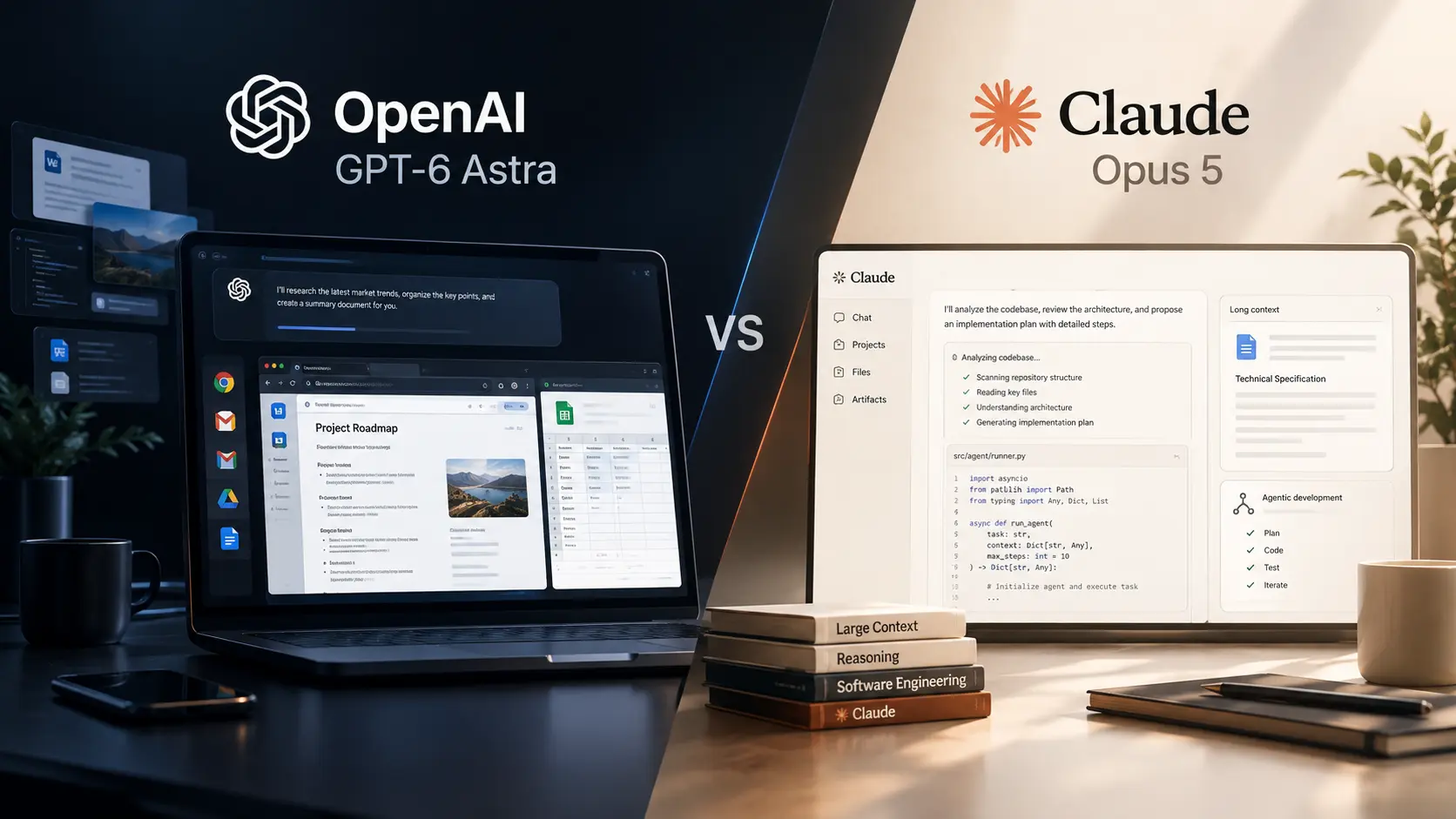
Choosing between modern AI Models is no longer as simple as asking which chatbot writes better answers. In 2026, the real question is whether an AI can reason through a complicated task, work with large files, write code, use tools, browse information, and complete multi-step work without needing constant supervision. GPT-6 Astra and Claude Opus 5 are built for this kind of work, but they take different approaches. Astra focuses strongly on computer use, browsing, software engineering, research, and professional workflows. Claude Opus 5 focuses heavily on complex agentic coding, long-running tasks, reasoning, and enterprise work. This AI model comparison looks at where each model makes the most sense for developers, content creators, marketers, professionals, and everyday AI users.
Editorial disclosure: This comparison is independently researched using current official product and pricing information. Features and prices may change.
How We Evaluate These AI Models
We evaluated these two models based on practical AI-work requirements rather than relying only on benchmark scores. The comparison reflects the September 2026 AI landscape, including OpenAI’s GPT-6 Astra release and Anthropic’s current Claude lineup.
Our evaluation focuses on:
- Reasoning and complex task handling
- Coding and software-development workflows
- Context-window capacity
- Computer and tool use
- Writing and professional content
- API and subscription pricing
The goal is straightforward: when you’re choosing between modern AI assistants, you should understand how each model fits into your actual workflow instead of choosing based on a benchmark headline alone.
AI Models at a Glance
| Tool Name | Best For | Starting Price |
| GPT-6 Astra | Computer use, coding, research and professional workflows | $10 / 1M input tokens |
| Claude Opus 5 | Long-running agents, coding and enterprise work | $5 / 1M input tokens |
GPT-6 Astra’s official API pricing starts at $10 per million input tokens and $50 per million output tokens. Claude Opus 5 is priced at $5 per million input tokens and $25 per million output tokens.
GPT-6 Astra: Best AI Model for Computer Use and End-to-End Workflows
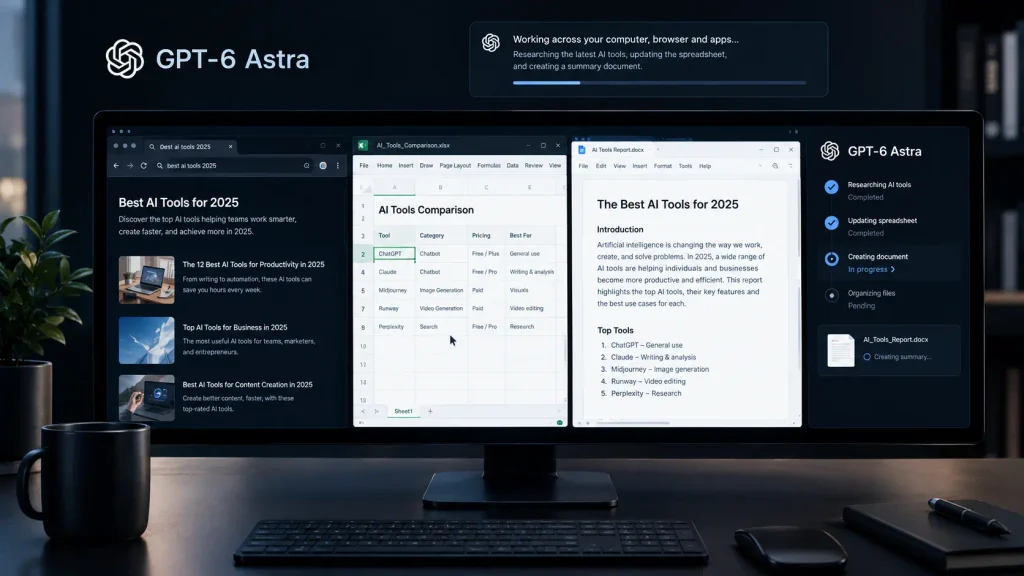
GPT-6 Astra is the stronger choice if you want an AI model that goes beyond producing a text response. OpenAI describes Astra as its most capable model for complex reasoning, coding, computer use, research, and document creation. One useful technical detail is its 1.05-million-token context window and maximum output of 128,000 tokens. Developers can also control reasoning effort using low, medium, high, xhigh, or max.
The more interesting difference is computer use. Astra is designed to handle tasks involving browsers and software rather than simply explaining what you should click. OpenAI highlights workflows involving websites, spreadsheets, documents, presentations, software testing, research, and other professional tasks. That makes Astra particularly useful when your workflow crosses several applications. For example, instead of asking an AI to explain how to organize information in a spreadsheet, you can build an agent around Astra that performs the multi-step workflow itself.
Pros
- Strong computer-use and multi-step workflow capabilities.
- 1.05M-token context window and up to 128K output tokens.
Cons
- API output pricing is considerably higher than Claude Opus 5.
- Availability is still rolling out following its September 2026 launch.
Pricing: GPT-6 Astra costs $10 per 1M input tokens and $50 per 1M output tokens. Cached input is $1 per 1M tokens. Astra is also rolling out to ChatGPT Plus, Pro, Business, and Enterprise users.
Claude Opus 5: Best AI Model for Long-Running Coding and Reasoning
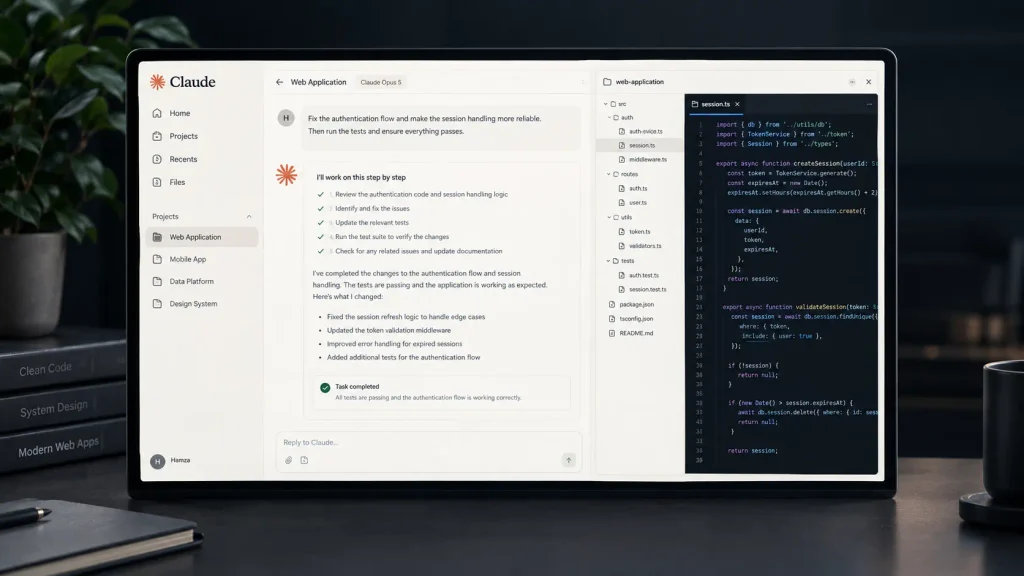
Claude Opus 5 takes a different approach. Anthropic positions it for complex agentic coding and enterprise work, making it particularly interesting if you’re building software agents or handling long-running technical projects. Opus 5 has a 1-million-token context window and a maximum output of 128K tokens. Its API price is also considerably lower than Astra’s: $5 per million input tokens and $25 per million output tokens.
One practical feature worth noticing is prompt caching. Anthropic lists prompt-cache write pricing at $6.25 per million tokens and cache reads at $0.50 per million tokens for Opus 5. That can matter when your application repeatedly sends the same large instructions, project context, or documentation. For developers, this means Claude can become particularly attractive when you’re running repeated agentic tasks against the same codebase.
Claude’s consumer offering also includes useful developer features. The Pro plan includes Claude Code, while Max plans provide substantially higher usage limits for heavy users. If your main concern is getting maximum value from a powerful large language model, Claude deserves serious consideration.
Pros
- API input and output pricing is half Astra’s listed rates.
- Strong fit for coding, agents, reasoning, and long-context workflows.
Cons
- Some advanced capabilities are primarily useful to developers and technical users.
- Heavy users may need Max or API credits when regular plan limits become restrictive.
Pricing: Claude offers a Free plan, Pro at $20/month when billed monthly, and Max starting at $100/month. Annual Pro billing is listed at $200. Opus 5 API pricing is $5 per 1M input tokens and $25 per 1M output tokens.
GPT-6 Astra vs Claude Opus 5: Technical Comparison
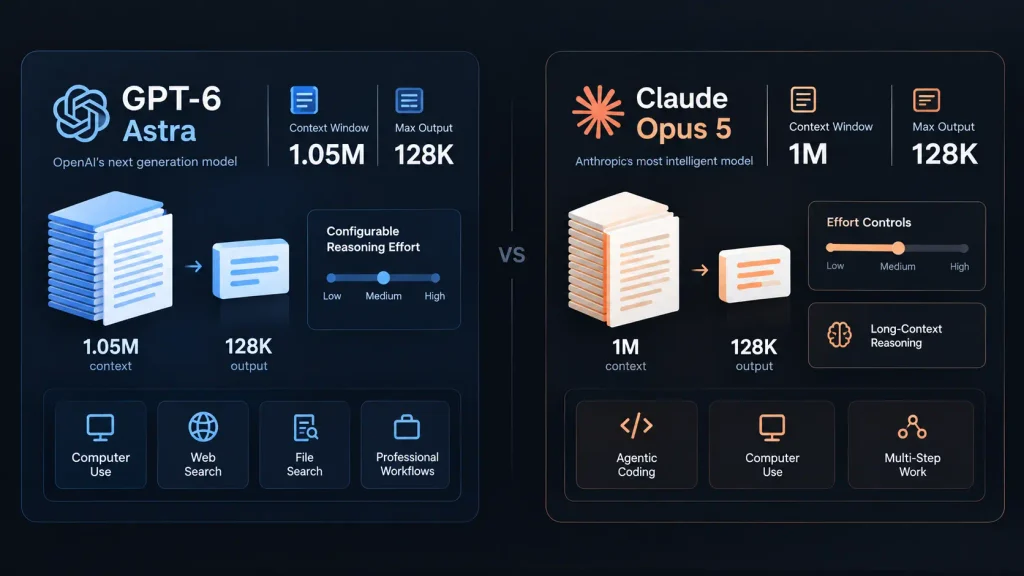
| Feature | GPT-6 Astra | Claude Opus 5 |
| Context window | 1.05M tokens | 1M tokens |
| Maximum output | 128K tokens | 128K tokens |
| Input price | $10 / 1M tokens | $5 / 1M tokens |
| Output price | $50 / 1M tokens | $25 / 1M tokens |
| Reasoning controls | Low to Max | Adaptive |
| Computer use | Major focus | Supported within agentic workflows |
| Coding | Excellent | Excellent |
| Long-running agents | Strong | Major focus |
| Best fit | End-to-end workflows | Coding and long-running agents |
Both models are operating in a similar technical class, but their priorities are different. Astra puts unusually strong emphasis on computer use and completing professional workflows, while Claude emphasizes agentic coding, reasoning, and sustained technical work.
Which AI Model Is Better for Developers?
If you’re primarily writing software, Claude Opus 5 gets the edge for value. The biggest reason is simple pricing. Claude’s API costs $5 per million input tokens and $25 per million output tokens, while Astra costs $10 and $50 respectively. Both offer approximately one million tokens of context and 128K maximum output. Claude is also positioned specifically around agentic coding. That makes it a strong option for developers working on repositories, debugging, refactoring, documentation, and multi-step development tasks.
Astra becomes more attractive when software development involves direct computer interaction. Its broader computer-use capabilities can be useful when an agent needs to interact with websites, applications, files, or other parts of a development environment.
Which Is Better for Content Creators and Marketers?
For everyday writing, both models are more than capable. The bigger difference is what happens after the writing. Astra is especially interesting when content production includes research, documents, spreadsheets, presentations, browsing, and other applications. OpenAI specifically highlights Astra’s ability to create professional documents, spreadsheets, presentations, and analyses while following existing templates and instructions.
Claude is attractive when your work revolves around long documents, research notes, source material, and iterative editing. Its large context window lets you keep a substantial amount of information available during a single workflow. For marketers, that can be useful when you’re working with campaign documentation, customer research, content briefs, brand guidelines, and long reports.
Which AI Model Offers Better Value?
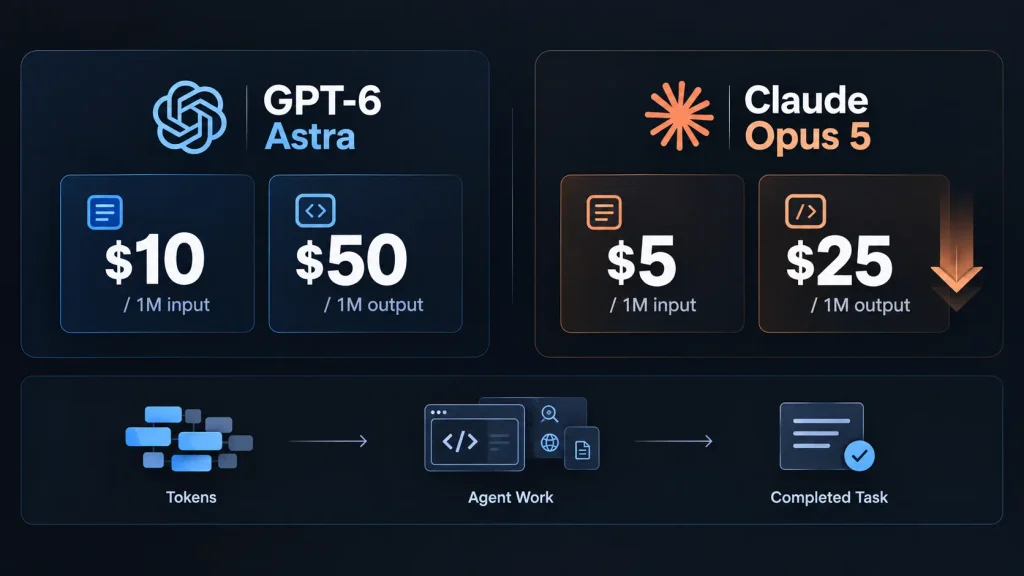
Claude Opus 5 wins the straightforward token-price comparison. Its API costs $5 per million input tokens and $25 per million output tokens, compared with Astra’s $10 and $50. However, you shouldn’t automatically assume the cheaper token price means a cheaper completed task. An AI agent can consume different numbers of tokens depending on how it reasons, how many tool calls it makes, and how many times it needs to retry. A model that costs more per token can still make sense if it completes a complicated workflow with fewer iterations. For that reason, developers should measure cost per completed task, not just cost per million tokens.
GPT-6 Astra vs Claude: Which Should You Choose?
Choose GPT-6 Astra if you want an AI that can combine reasoning with computer use, browsing, software interaction, research, and professional document workflows. Choose Claude Opus 5 if your priority is long-running coding, complex reasoning, large-context work, and lower API costs. For developers building AI agents, Claude Opus 5 is the easier starting point from a pricing perspective. For professionals who want an AI assistant capable of performing actions across software and business workflows, Astra deserves a serious test. Neither model wins every category. That’s actually the useful conclusion.
Final Verdict
The AI Models competition in 2026 is less about finding one universal winner and more about matching the model to the job. GPT-6 Astra stands out for computer use, professional workflows, research, and multi-step automation. Claude Opus 5 is the stronger value proposition for long-running coding, reasoning, and API-based development. If you can access both, test the same real-world project in each model before committing. The most useful question isn’t simply which model is smarter it is which one can reliably finish the work you actually need done?
FAQ
Is GPT-6 Astra better than Claude for coding?
Not in every situation. Claude Opus 5 is specifically positioned for complex agentic coding and enterprise work, while Astra combines coding with broader computer-use and professional workflow capabilities. The best choice depends on your development environment. Test both models against the same repository, task, tools, and acceptance criteria before deciding.
Which AI Models are cheaper through the API?
Claude Opus 5 has the lower published token rates. It costs $5 per million input tokens and $25 per million output tokens. GPT-6 Astra costs $10 per million input tokens and $50 per million output tokens. That makes Claude the more attractive starting point for applications where token usage is high.
Can I use these models for business work?
Yes, but you should still review privacy, security, data retention, permissions, and compliance requirements before giving an AI access to sensitive business information. OpenAI states that GPT-6 Astra supports Zero Data Retention for eligible API customers. Claude’s enterprise offering includes features such as role-based access, audit logs, custom data retention controls, and other administrative controls.