ChatGPT, Claude and Grok Down: Users Report Login and Chat Errors Worldwide
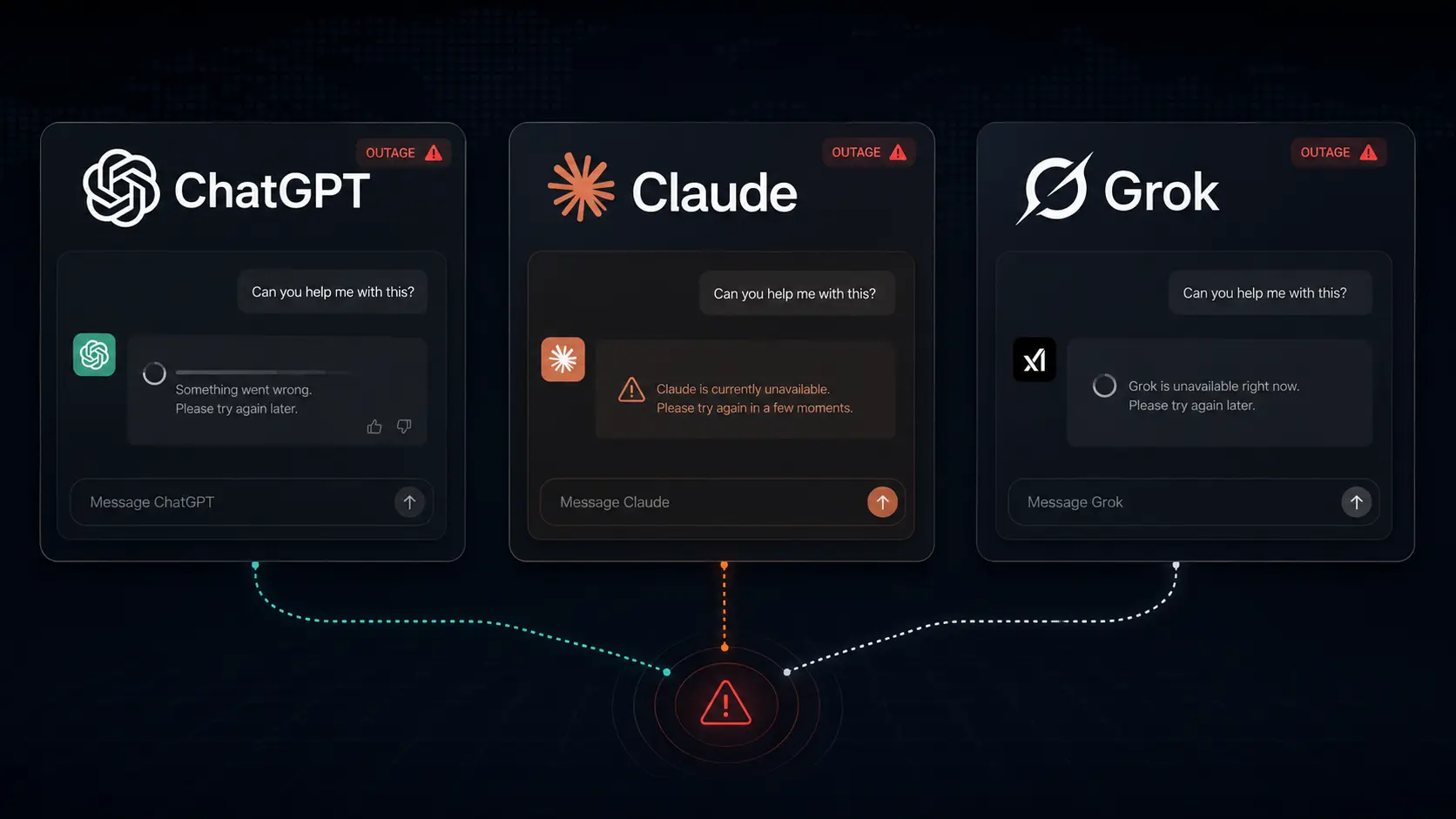
Major artificial intelligence platforms faced service disruptions on September 3, 2026, as users around the world reported problems with ChatGPT, Claude, and Grok. Users experienced login failures, chat errors, application problems, and difficulties generating AI responses. The incidents involving the three platforms happened during the same general period, creating widespread concern among people who rely on AI tools for work, coding, research, writing, and everyday productivity. Although ChatGPT, Claude, and Grok were all experiencing problems, the incidents appeared to be separate service disruptions rather than one common technical failure affecting all three companies.
ChatGPT Users Report Access and Chat Errors
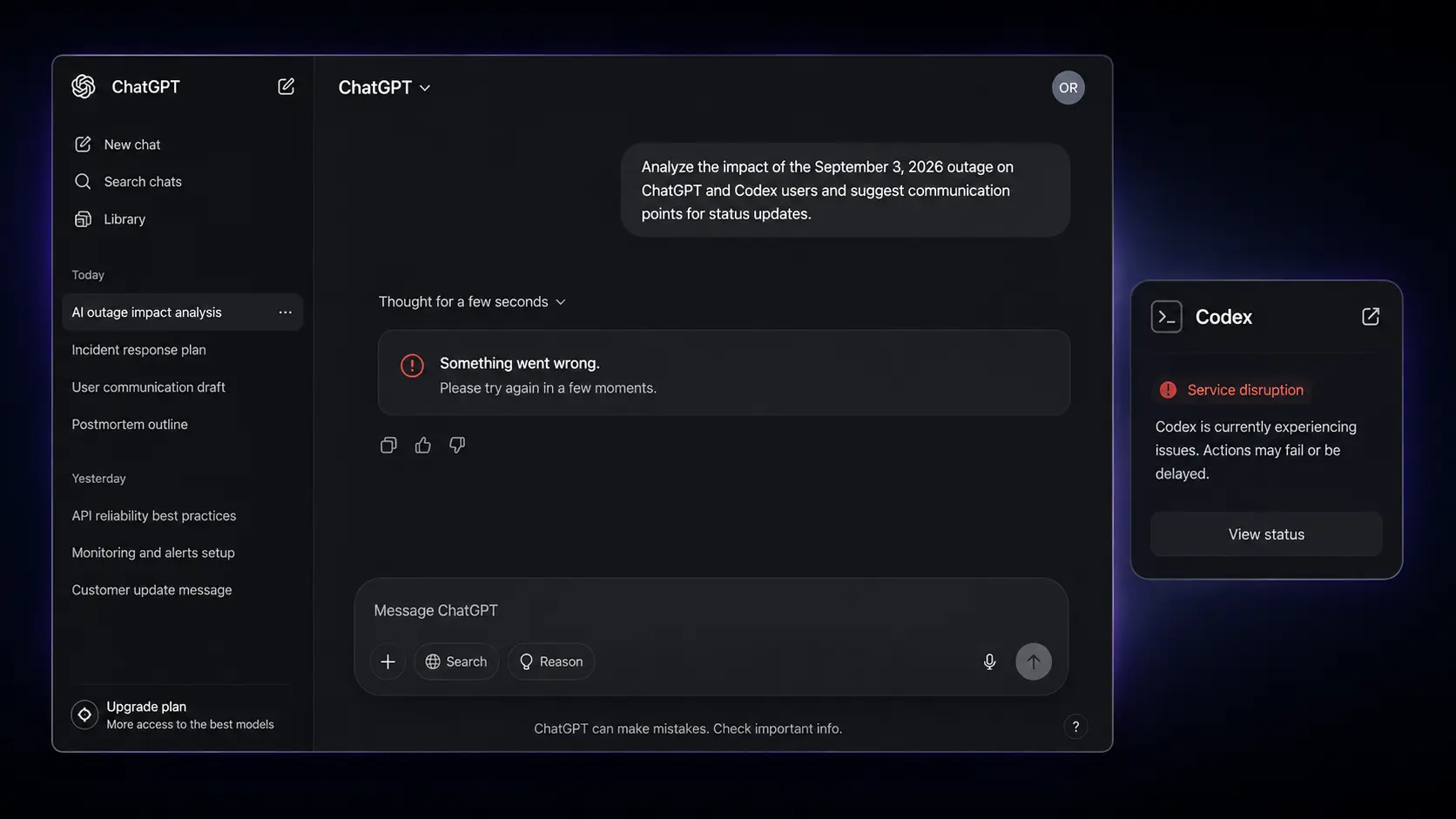
OpenAI’s ChatGPT was one of the major AI services affected by the disruption. OpenAI acknowledged an incident involving elevated errors across ChatGPT and Codex. Users reported difficulties accessing the service and completing normal conversations. Some users experienced login problems, while others were able to access ChatGPT but encountered errors when trying to send prompts or receive responses.
The disruption also affected Codex, which is used for coding-related tasks. Developers and other users relying on AI-assisted programming could therefore experience interruptions. Developers interested in the open-source coding agent can also explore the OpenAI Codex GitHub repository, which provides access to the project’s source code and related documentation.
For regular ChatGPT users, the outage could appear in several ways. Conversations might fail to load, prompts might not be processed, or the service might return errors instead of completing a request. OpenAI’s status information indicated that the company was investigating the elevated error rate and working toward resolving the issue.
Claude Faces Problems Across Multiple Services
Anthropic’s Claude also experienced a significant service incident during the same period.
The disruption was not limited to a single Claude model. According to the report, several Claude models were affected, including Claude Mythos 5.1, Claude Fable 5.1, Claude Mythos 5, Claude Fable 5, Claude Opus 5, Claude Opus 4.8, and Claude Opus 4.6.
Several Claude-related services also experienced partial outages. These included claude.ai, the Claude API, Claude Code, and Claude Cowork. This meant that the disruption could affect individual Claude users as well as developers, businesses, and teams using Anthropic’s API and coding services. Anthropic said it had identified the cause of the errors and was working on a fix. However, detailed technical information about the exact cause was not provided at the time of the report.
Grok Reports Rise Sharply
Grok, the AI chatbot developed by xAI, was also experiencing problems during the same period. Information from Downdetector showed a significant increase in reports from Grok users. The number of reports reportedly increased from a normal level of around seven to more than 1,000 within a few hours.
The sharp increase suggested that a large number of users were experiencing problems with the service. Unlike ChatGPT and Claude, the available information about Grok was primarily based on user reports and outage-monitoring data. At the time the report was published, xAI had not officially acknowledged the disruption through its own channels.
What Was Wrong With Grok?
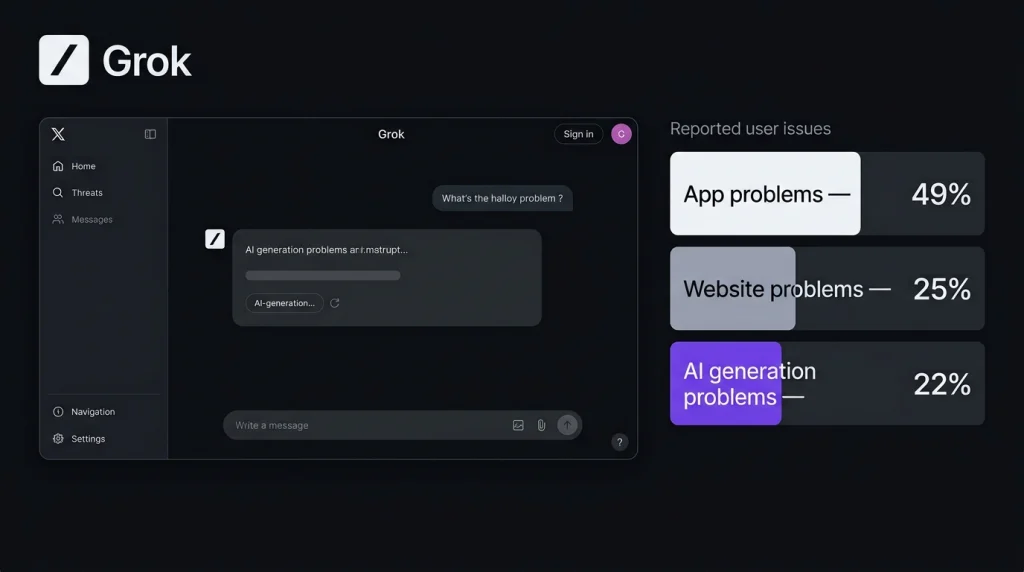
Downdetector’s breakdown showed the main categories of problems reported by Grok users.
According to the report:
| Grok Problem | Reported Share |
| App problems | 49% |
| Website problems | 25% |
| AI generation problems | 22% |
The figures show that app-related issues were the most commonly reported Grok problem, accounting for 49% of reports. Website problems represented another 25%, while 22% of users reported issues with AI generation. This indicates that the disruption affected multiple parts of the Grok experience. Users were not only having trouble accessing the service through the app or website, but some were also unable to generate AI responses properly. The high percentage of app-related complaints was particularly notable because it suggested that mobile users were experiencing a significant portion of the disruption.
Why the Simultaneous Outages Were Significant
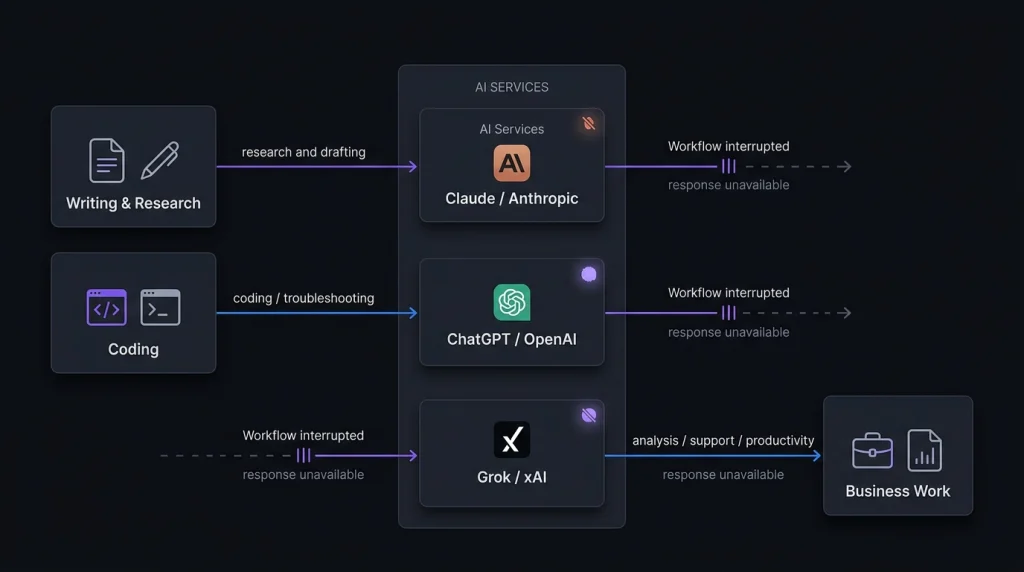
The timing of the incidents was particularly notable because ChatGPT, Claude, and Grok are among the most widely used AI assistants. Normally, users experiencing problems with one AI chatbot can switch to another platform. However, when several major AI services experience disruptions around the same time, finding an immediate alternative becomes more difficult.
This can be especially problematic for professionals who use AI as part of their daily workflow. Writers may rely on AI for research and content creation. Developers may use AI coding tools to write, review, or troubleshoot code. Businesses can use AI for customer support, analysis, automation, and other operations. A temporary outage can therefore interrupt important work rather than simply preventing users from having casual conversations with a chatbot.
Web and Mobile Users Experienced Problems
The reported disruptions were not limited to desktop users. People accessing these AI services through websites and mobile applications also encountered problems. Depending on the platform and individual user, symptoms could include login failures, application errors, chat failures, or problems generating responses.
This can make an outage confusing because one user may be able to access a service while another user receives an error. Checking an official service-status page can help users determine whether the problem is related to their individual connection or is part of a wider platform outage.
Login Problems Were Among the Reported Issues
Login and account-access problems were among the issues reported during the disruptions. When an AI platform experiences an outage, users may be unable to sign in at all. In other cases, they may successfully log in but discover that conversations or other features are not working.
This makes it difficult for users to immediately determine whether the problem is with their account, internet connection, device, application, or the AI provider’s infrastructure. For users facing login errors, repeatedly attempting to sign in may not solve the problem if the underlying issue is affecting the platform itself.
Chat and AI Generation Problems
Another important part of the incidents involved actual AI conversations and response generation. Being able to open an AI website does not necessarily mean that the underlying service is functioning normally. Users may successfully reach the homepage but encounter errors when submitting a prompt.
For Grok, Downdetector specifically identified AI generation problems as 22% of reported issues. This means a notable portion of users were experiencing problems with the core function of the chatbot rather than simply having difficulty accessing the platform. Similar chat and response-related problems were reported by users of ChatGPT and Claude during their respective incidents.
What OpenAI Was Doing
OpenAI acknowledged the ChatGPT and Codex incident through its status information. The company described the problem as elevated errors and indicated that it was investigating the situation. Engineers were working to resolve the issue and restore normal service. The acknowledgement was important because it confirmed that the reported ChatGPT problems were part of a broader service incident rather than isolated issues affecting only individual users.
What Anthropic Was Doing
Anthropic also officially acknowledged the Claude disruption. The company said it had identified the cause of the errors and was working on a fix. The incident affected several models and services, making it broader than an outage involving just one Claude model. However, at the time of the report, Anthropic had not provided detailed technical information explaining exactly what had caused the disruption.
What xAI Said About Grok
The situation was different for Grok. While Downdetector was showing a major increase in user reports, the report noted that xAI had not posted an official update acknowledging the Grok disruption through its own channels at that time.
Therefore, it would be difficult to confirm a specific technical cause for the Grok outage based solely on the available information. The Downdetector figures nevertheless showed that the number of user complaints had increased significantly during the affected period.
What Users Can Do During an AI Outage
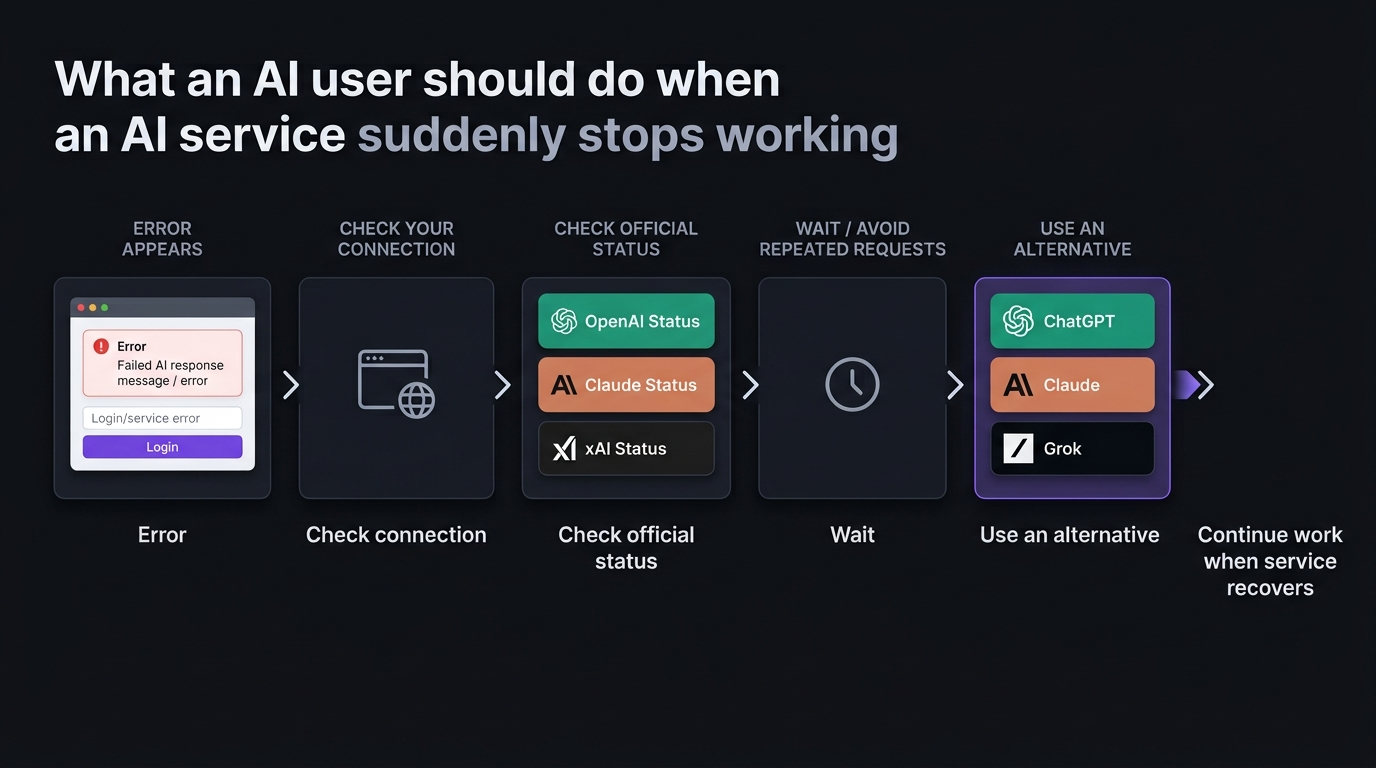
Users experiencing AI service problems can take several practical steps. First, try refreshing the website or restarting the application. Temporary problems can sometimes disappear after reconnecting. Users should also avoid repeatedly submitting the same prompt if a platform is experiencing a confirmed outage. Waiting for the service to recover can be more effective.
Checking the relevant official status page is another useful option. Status pages can show whether a company is aware of an incident and whether engineers are working on a solution. For urgent work, users can also consider using an alternative AI service. Having multiple tools available can reduce dependence on one provider.
Why AI Service Reliability Matters
The incidents involving ChatGPT, Claude, and Grok highlight how dependent users have become on cloud-based AI services. AI assistants are now used for software development, writing, research, education, business operations, customer service, data analysis, and productivity. When a major AI service goes offline, users can lose access to an important part of their daily workflow. For businesses, this makes backup options increasingly valuable. Teams that rely heavily on AI may benefit from having alternative platforms available so important work can continue during unexpected service interruptions.
Final Thoughts
The September 3, 2026 disruptions involving ChatGPT, Claude, and Grok attracted significant attention because several major AI platforms experienced problems during the same period. OpenAI confirmed elevated errors affecting ChatGPT and Codex. Anthropic reported problems affecting multiple Claude models and services, including claude.ai, the Claude API, Claude Code, and Claude Cowork. Grok also experienced a sharp increase in user reports on Downdetector. The breakdown showed that 49% of reports involved app problems, 25% involved website problems, and 22% involved AI generation problems.
Although the incidents appeared to be separate, their timing demonstrated how difficult it can be for users to depend entirely on a single AI platform. As AI becomes more deeply integrated into everyday work, keeping alternative tools available and monitoring official service-status updates can help users minimize disruption when major AI platforms experience unexpected outages.