Australia’s New 30% Minimum Capital Gains Tax: Who Pays and When
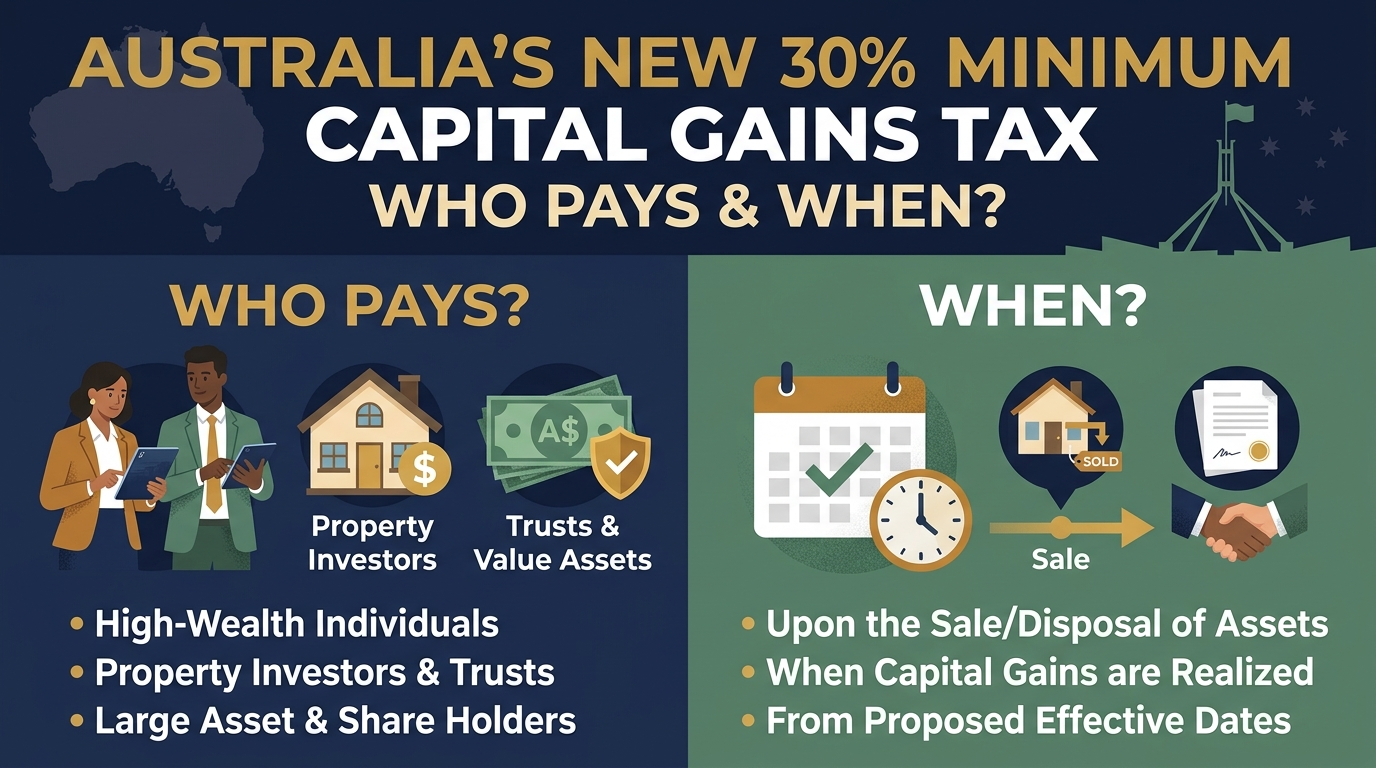
For decades, Australian investors have relied on a simple rule: hold an asset for more than a year and only half the profit is taxed. That rule is about to change. When the new financial year begins on 1 July 2027, today’s half-off discount gives way to a different system, with many future gains facing a tax floor of 30%. The reform has become law, and debate has intensified, with business groups and independent MP Allegra Spender warning it will hurt investment. Here we explain the capital gains tax changes in 2027, who will pay the minimum tax on capital gains in Australia, and who is exempt. This is general information, not tax advice.
What Is Changing
The current system lets individuals, trusts and partnerships halve the gain on anything owned for a year or longer before tax is worked out. From 1 July 2027, that discount will be replaced by two new features, according to analysis from accounting firm Pitcher Partners:
- Cost base indexation. The original purchase price of an asset is adjusted upward for inflation, so you are only taxed on the “real” gain above inflation.
- A 30% minimum tax. That real gain will be taxed at no less than 30%, even if your normal marginal tax rate is lower.
The changes were announced in the 2026–27 Federal Budget and have since passed Parliament.
Assets Bought Before the Change
This is the part that worries many investors, so it is worth being precise. The reform splits a gain around 1 July 2027. Growth that built up before that date stays under today’s rules, including the 50% discount for eligible assets. Only growth after that date falls under indexation and the minimum rate, as the Ashurst analysis of the Budget explains.
That means many investors will need to know what their assets were worth on 1 July 2027. Keeping good records and obtaining valuations where needed will become important.
Older pre-CGT assets
Assets bought before capital gains tax began in September 1985 have long been fully exempt. Under the new rules, growth on those assets after 1 July 2027 will become taxable, while gains up to that date remain exempt.
Who Avoids the Minimum Rate
Several important groups are protected:
- Your family home. The main residence exemption continues.
- Income support recipients. People receiving the Age Pension, JobSeeker, the Disability Support Pension and other listed payments in the year they sell do not face the 30% floor. Their gains are still taxed at their usual rates.
- High-income earners already above 30%. The minimum only affects people whose usual tax rate on the gain would be lower than 30%.
Who Is Most Affected
The minimum tax mainly affects people with a low taxable income in the year of a sale. That includes self-funded retirees, people who have stopped working, and anyone who planned to sell assets in a low-income year to reduce tax.
For example, a self-funded retiree on a 16% marginal rate could see their tax on a real gain nearly double under the new floor. Critics, including Spender, argue this creates a sharp divide between self-funded retirees and age pensioners, and could discourage investment. Supporters say the reform stops people timing sales to minimise tax and targets a discount that has mostly benefited wealthier Australians.
Practical Steps for Investors
We suggest a few sensible steps well before 1 July 2027:
- Review your portfolio to understand which assets may be affected.
- Keep detailed records of purchase prices and costs.
- Consider valuations around 1 July 2027 for significant assets.
- Speak with a registered tax agent or financial adviser before making major decisions.
Money matters are in focus this week, with a possible rate rise also on the table, as our guide to the RBA’s Melbourne Cup Day decision explains. Our how capital gains tax works in Australia guide covers the basics.
A Major Shift in How Investment Gains Are Taxed
Swapping the 50% discount for inflation indexation and a 30% floor is one of the biggest changes to Australia’s tax system in decades. Its impact will depend heavily on your income, the assets you own and when you sell. Get advice early, keep good records, and plan any major sales with the 1 July 2027 start date in mind.
Frequently Asked Questions
It covers real gains that build up from 1 July 2027 onward.
No. Growth up to 1 July 2027 stays under the current rules, including the 50% discount where eligible.
Yes. Recipients of the Age Pension and other listed income support payments in the year of sale do not pay the 30% floor.
No. The main residence exemption continues to apply.